
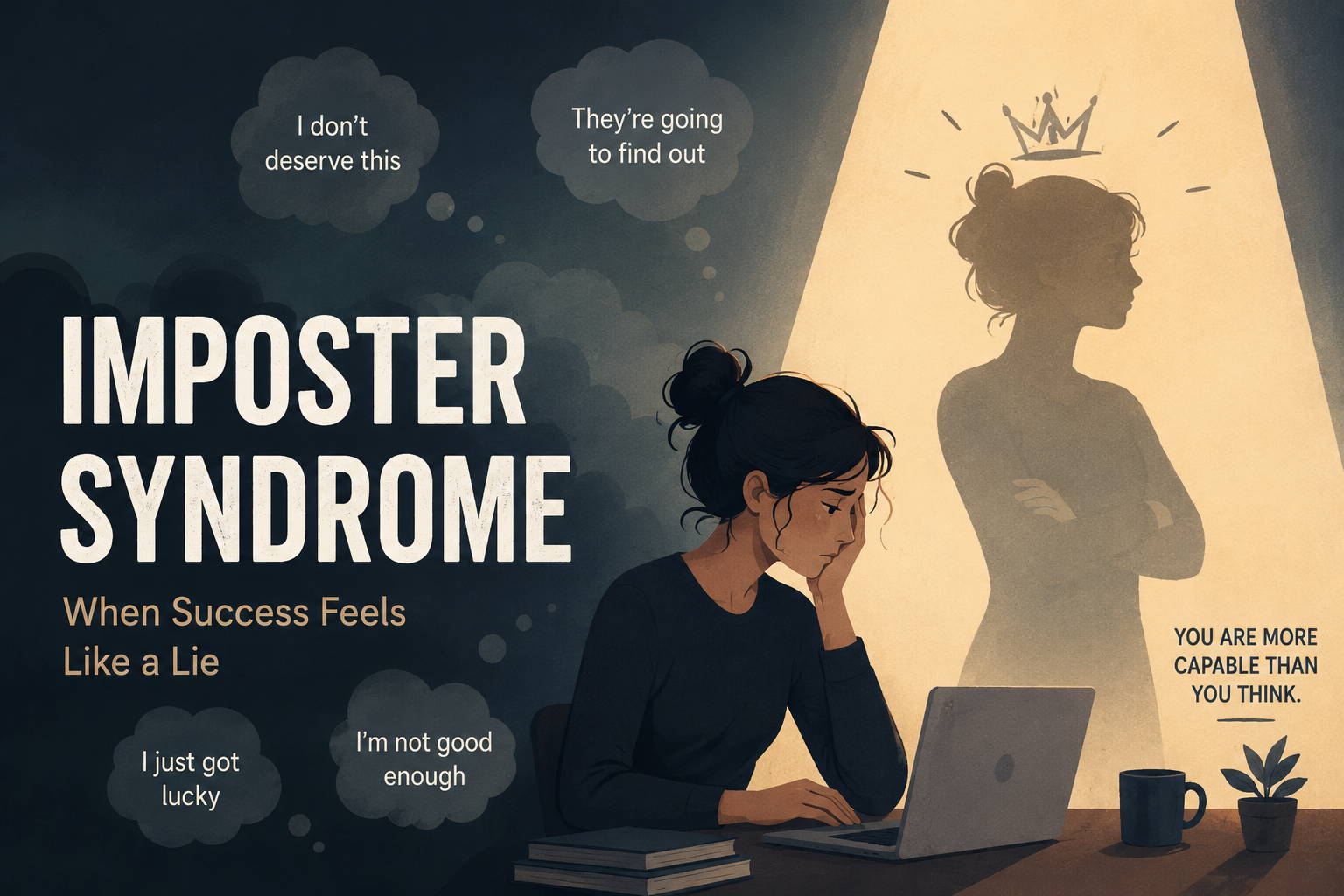
Have you ever had a feeling that you don’t belong where you are, despite the effort you put in? Do you often feel like your achievements and appreciation are a matter of luck and you don’t deserve any of that? This is not just overthinking, this is a thought that comes out of constant self-doubt and such persistent thought may indicate Imposter Syndrome. Rather than being a mental illness, imposter syndrome is a behavioural phenomenon which costs your self-esteem and confidence. The signs of having imposter syndrome is more likely seen in healthcare professionals, technical workers and other high achievers. The constant work pressure and not getting satisfied with their own work will push individuals to procrastinate to make their work ‘perfect’. In this article, you will understand what imposter syndrome is and the practical ways to overcome it.
Understanding Imposter Syndrome
Imposter syndrome is the persistent feeling of being a fraud and having a constant self doubt on your achievements. Simply, you think you are an imposter who is trying not to get caught on being fraudulent in the workplace. In reality, you might be an over-achieving, hardworking person who is committed to completing the task, but imposter syndrome gives you the false belief that you are not doing enough and the applause you receive is merely luck.
Do you have Imposter Syndrome?
If you struggle with imposter syndrome, you often tend to explain your success in a way that your ability and hard work didn’t matter at all. If you score well on a test, you probably think either the questions were easy or you over prepared to be on the top. Even in the workplace if you get promoted to a higher post, you think of it as mere recommendation as a result of feeling pity for your struggle. You never see the talent and potential it takes your team to recommend you to such a position.
Another major trait that imposters follows is perfectionism. Even if it’s a simple task, you want it to be the best out of everyone. If you fail to meet that standard, you consider yourself a loser and suffer with the constant feeling of underachievement. This action can lead you to procrastinate your task every time you are assigned with a new commitment. This eventually results in failure to meet the deadline, which in turn makes you question your potential and worth. This ‘imposter cycle’ is a mixture of guilt, fear of failure, fear of success and even accompanied with anxiety and depression.
You might also feel as an imposter even in romantic relationships and parenting. You feel like you don’t deserve your partner’s love or are not equally contributing in maintaining the harmony of your relationship. Comparing yourself with other parents is also seen among new parents. You might have a feeling that you unnecessarily push your children to achieve higher expectations.
With minor changes in behavioural patterns, imposter syndrome can be conquered.
How does Imposter Syndrome Develop?
There is no specific definition or pathological mechanism that everyone agrees which explains how imposter syndrome develops. But there are multiple behavioural factors that can lead to imposter syndrome. Which include,
-
Constant comparison with others since childhood can lead to questioning one’s self confidence and potential. The feeling of ‘not doing well enough’ can occur at a very young age which stresses them to do beyond their potential and still not reach the goal. This makes them feel disappointed in themselves.
-
Not getting enough compliments or recognition for a work where you put a lot of effort in. This can happen in school and the workplace. Lack of praise from parents can make their children seek validation constantly, which might affect the child’s self esteem.
-
The social media standards can also make one overwhelmed and feel insecure about something they are naturally good at.
How Imposter Syndrome can affect your life?
The individuals who experience imposter syndrome mostly include,
-
Healthcare professionals
-
Entrepreneurs
-
Students
-
Corporate employees
-
New parents
Imposter syndrome can affect your life in many ways:
-
It makes you deny offers or promotions because you think others will expect you to have advanced skills and potential, where the lack of it can make you get caught one day.
-
Not accepting compliments from your peers since you think you don’t deserve that.
-
Not able to meet the deadline as you are busy procrastinating to make the task look clean and perfect.
-
Thinking mistakes as something made by unintelligent and unskilled people, and not giving opportunities to learn from them.
How to Overcome Imposter Syndrome?
Since imposter syndrome is not defined as a mental illness. Everyday behavioural reflections can help in overcoming the specific patterns associated with imposter syndrome. Easy steps are:
-
Celebrating achievements even if it is minor helps to provide positive insights on your work.
-
Setting realistic goals and tracking progress of the achievements.
-
Asking for feedback, accepting the criticism and working on it is seen as a good sign to keep one motivated.
-
Learning from mistakes. Every mistake is a new lesson. Making mistakes and learning from them doesn’t make you a failure.
-
Having valuable conversations with your friends or closest acquaintance, helps one to relieve their pressure.
-
Stop comparing yourself with others. Everybody has unique potential, understanding yours is what makes you worth.
-
Seek professional help in case symptoms are accompanied with anxiety or depression.
Conclusion
Imposter Syndrome can be challenging, when the symptoms are left unnoticed and considered as normal. It can even affect successful individuals, leaving with self- doubt and fear of failure. This can be managed by understanding the practical ways to overcome imposter syndrome and cultivating those habits in everyday life. Challenge yourself, and seek medical support whenever necessary.
References
-
Ray pole C. You’re not fraud: How to recognize and overcome imposter syndrome. Healthline.November 14, 2024. Available from :https://www.healthline.com/health/mental-health/imposter-syndrome
-
Stanford Centre for Teaching and Learning. Imposter syndrome. Stanford University. Available from: https://ctl.stanford.edu/students/imposter-syndrome
About the author
Devinandana R K is a BAMS intern passionate about creating accurate, evidence- based and reader friendly health content.
Disclaimer: This article is for informational purposes only. Consult a qualified healthcare professional for personalised guidance.


No comments:
Post a Comment