
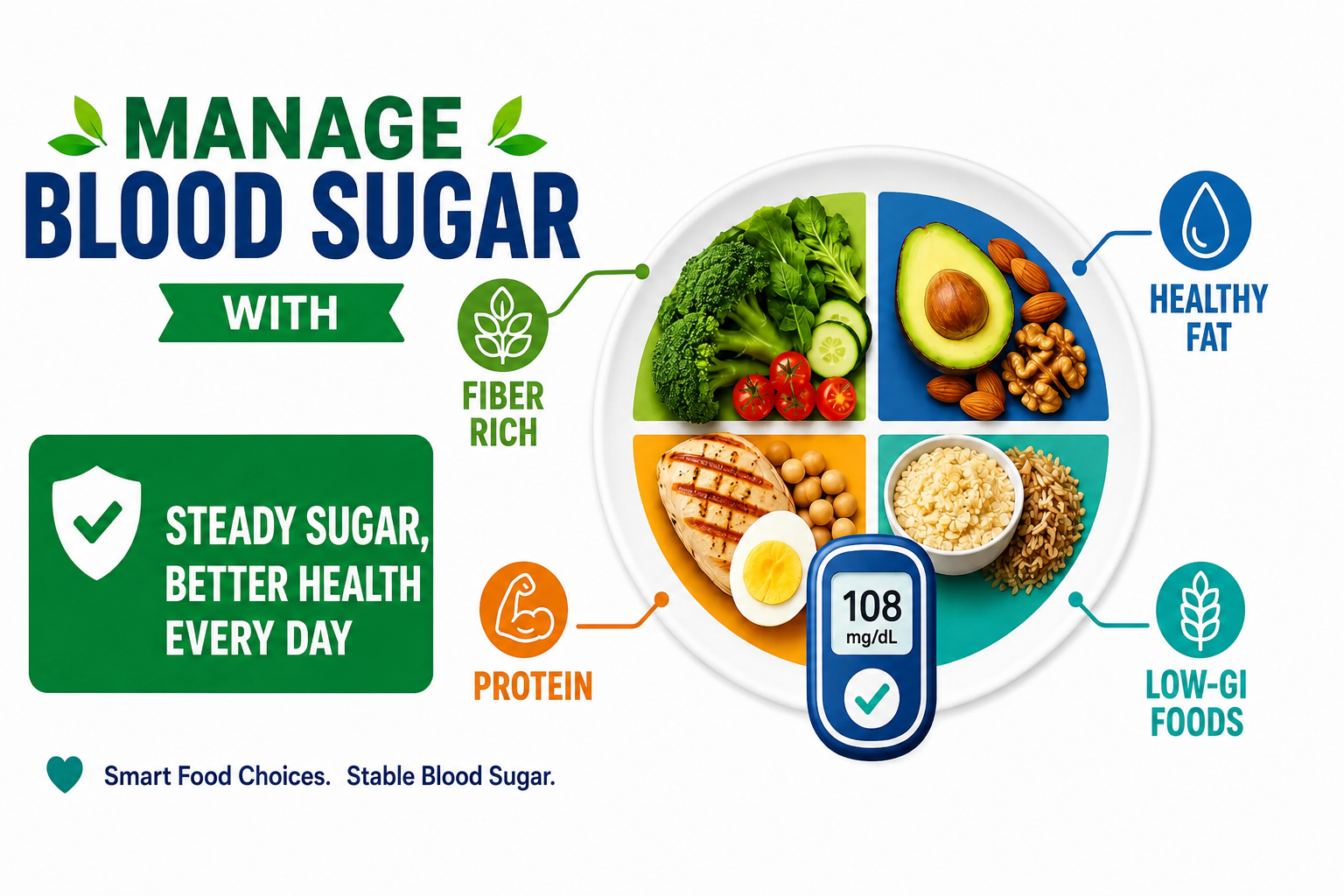
Do you feel overwhelmed by suggestions that focus more on avoiding certain foods rather than emphasizing what to eat? Living with diabetes is not solely about eliminating foods; it is about understanding how to eat, how many meals to have in a day, and what portions to eat to manage blood sugar (CDC 2025, Viswanathan et al.). Let's explore foods for blood sugar control in this article.
According to the International Diabetes Federation(IDF) Atlas 11th edition,2025, India had approximately 89.8 million adults aged 20-79 years living with diabetes in 2024. This number is projected to increase to approximately 156.7 million by 2050, placing India second globally in terms of adults living with diabetes (IDF 2025).
Foods for Blood Sugar Control
Controlling blood sugar levels does not always mean avoiding sugar and rice. The type and quantity of food, portion size, meal pattern, and individual treatment requirements should all be considered when planning meals (ICMR, 2018; Viswanathan et al., 2025).
Carbohydrate Foods for Blood Sugar Control
Carbohydrates are the body’s primary source of energy. During digestion, carbohydrates are broken down into glucose, which enters the bloodstream and is used by the cells for energy.
High fibre, minimally processed carbohydrate foods are generally digested more slowly than refined carbohydrates and may support greater satiety and a more gradual post-meal rise in blood glucose.
Minimally processed carbohydrates are carbohydrates that remain close to their natural form and have undergone little industrial processing.
Examples
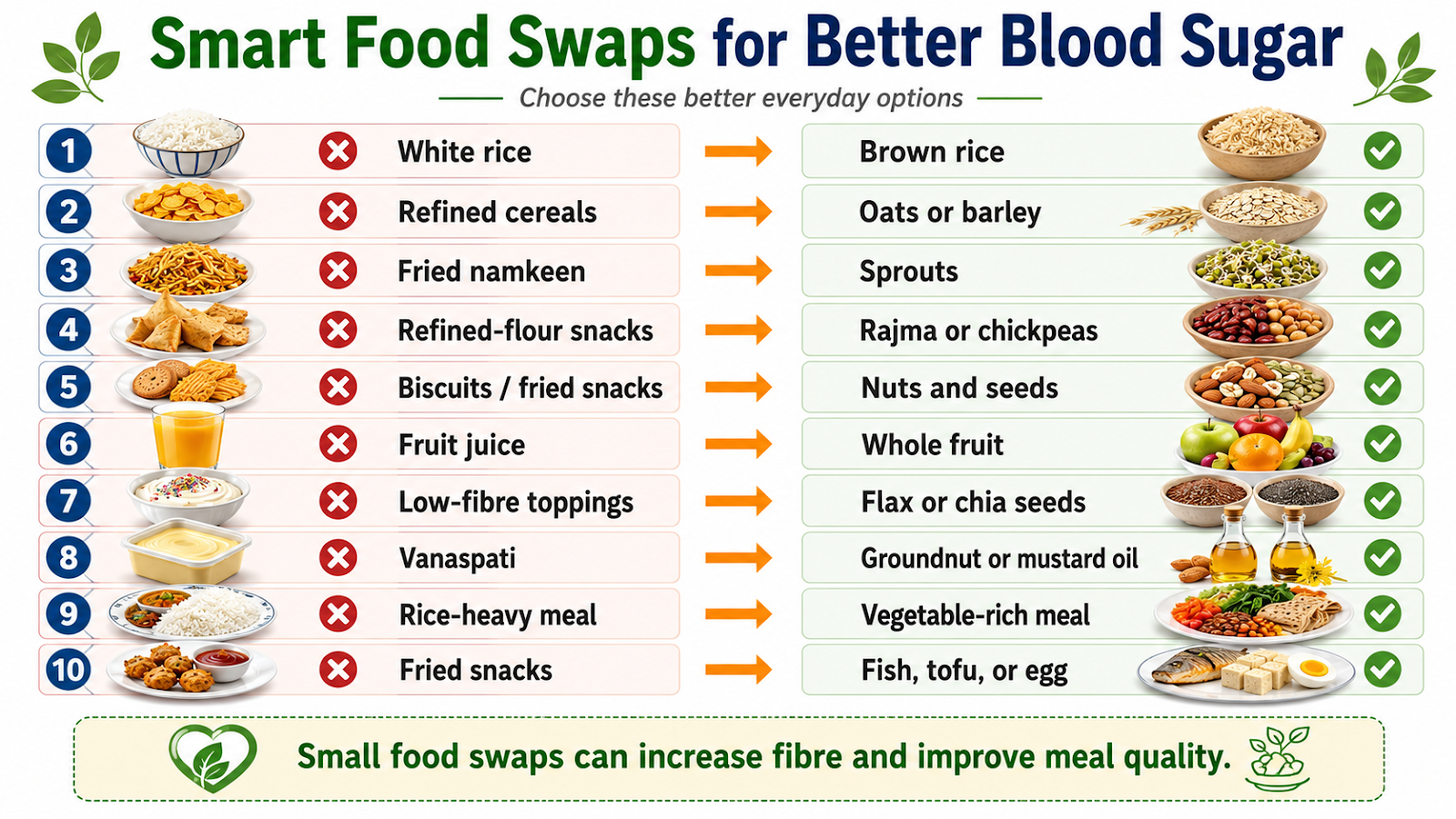
- Brown rice instead of polished white rice.
- Steel-cut or rolled oats instead of sugary instant oats.
- Whole-wheat roti instead of refined flour bread
- Whole millets instead of highly refined millet flour products
- Whole fruits instead of fruit juice
- Whole pulses and beans instead of packaged snack foods made from refined flour.(ICMR-NIN, 2024; Viswanathan et al., 2025).
Fiber-Rich Foods for Blood Sugar Control
Dietary fibre slows digestion and absorption of carbohydrates, thus preventing a rapid increase in post-meal blood sugar levels and promoting more stable glucose levels throughout the day. It helps you feel full, prevents overeating, and supports weight management.
Dietary fiber reaches the colon largely undigested, where it gets fermented using beneficial gut bacteria. During this fermentation, short-chain fatty acids(SCFAs) are produced, and these SCFAs help body cells respond more effectively to insulin. This improves insulin sensitivity and regulates stable blood sugar levels.
Example
- Whole pulses instead of strained dal water
- Flax seeds or chia seeds instead of fibre-poor toppings
- Nuts and seeds instead of biscuits or fried snacks
- Vegetables with their edible skin instead of heavily peeled vegetables
- A vegetable-rich meal instead of a meal dominated by white rice
Low-Glycemic-Index Foods for Blood Sugar Control
The glycemic index(GI) ranks carbohydrate-rich foods according to how quickly they raise blood glucose after consumption. Foods with a GI value of 55 or lower are generally classified as low-GI foods.
Low-GI foods generally cause a slower and more gradual rise in blood glucose than high-GI foods.
Their effect depends not only on the food itself but also on portion size, processing, cooking method, and other foods eaten with it (RSSDI 2025)
Examples
- Barley instead of refined breakfast cereals
- Whole pulses such as rajma or chana instead of refined-flour snacks
- Legume-based meals instead of meals based mainly on refined rice or flour
- Minimally processed millet preparations instead of finely milled millet snacks
Protein-Rich Foods for Blood Sugar Control
Protein comprises 15-20% of daily calories. The recommended dietary allowance is 0.8g per kg of body weight. A 60kg adult needs about 48g of protein daily.
Protein-rich foods make you feel full, reduce hunger, curb hunger, cut extra calories, and reduce snack cravings, supporting healthy weight management. Reduces post-meal glucose spikes and support insulin sensitivity.(RSSDI 2025)
Exmaple
- Sprouts instead of fried namkeen
- Tofu instead of deep-fried processed snacks
- Egg instead of sugary breakfast cereals
- Fish or skinless chicken instead of processed meat
- Paneer in a moderate portion instead of fried cheese products
- Milk without added sugar instead of sweetened milk beverages
- A combination of cereals and pulses, such as rice with dal, instead of cereals alone
Healthy Fat Foods for Blood Sugar Control
Healthy fats are primarily unsaturated fats (Monounsaturated fatty acids and polyunsaturated fatty acids).20-35% of daily calories come from healthy fats.
However, fats are energy dense, so portion control remains important. Saturated fats should be limited, and trans fats should be minimized (ICMR-NIN, 2024; Viswanathan et al., 2025).
Example
- Unsalted nuts instead of fried chips
- Groundnut or mustard oil in moderate amounts instead of vanaspati
- Homemade nut or seed chutney instead of creamy commercial sauces
- Plain peanut or sesame preparations instead of hydrogenated-fat spreads
- Unsaturated vegetable oils instead of repeated reheated oil
- Overall, when proteins and healthy fats are eaten with carbohydrates, they slow gastric emptying and glucose absorption, thereby reducing energy crashes.
How Portion Control Helps Manage Blood Sugar Levels.
- Instead of avoiding or eliminating food choices, focus on portion control and appropriate serving sizes.
- Even recommended foods can raise blood sugar levels if eaten in excess, so be mindful of the right portion sizes (CDC, n.d.; Viswanathan et al., 2025).
Diabetes plate method/The standard plate method
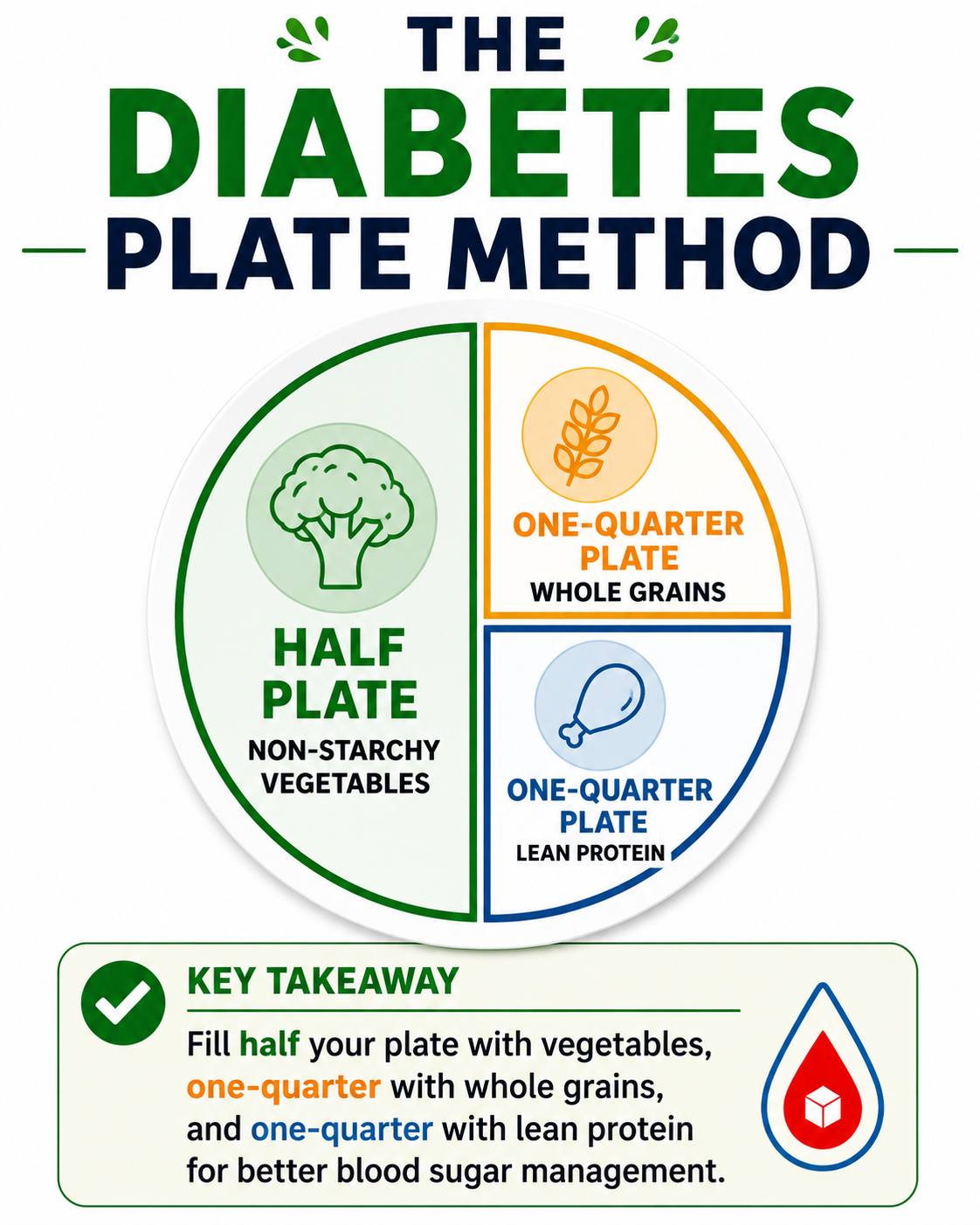
- Instead of choosing a random plate, use a 9-inch plate: fill half with non-starchy vegetables, one-quarter with lean protein, and one-quarter with grains or starch.
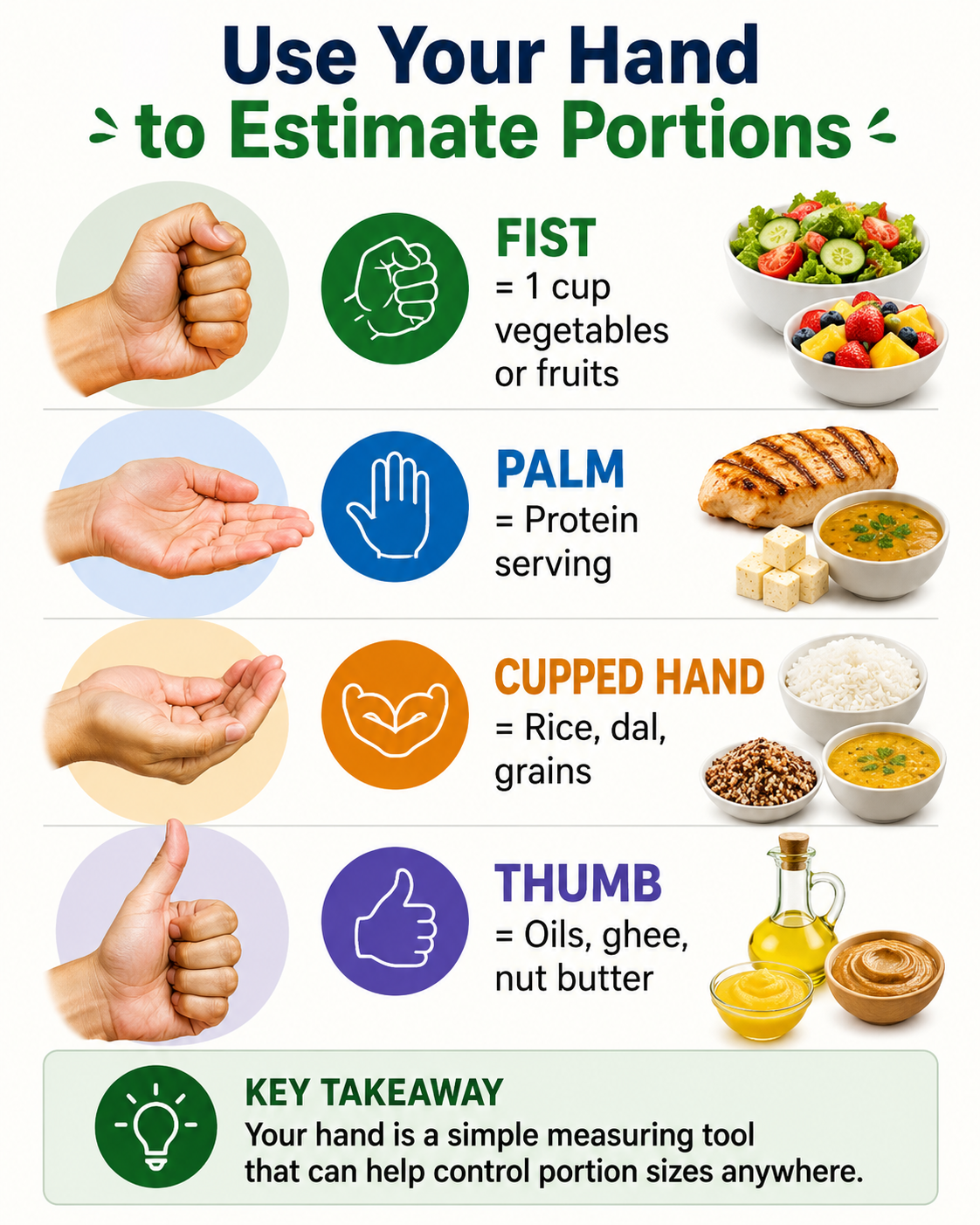
- If you don't have measuring tools, use simple body cues instead: your closed fist is about one cup, and your palm (without fingers) or a deck of cards represents one serving of protein.(Tasty Recipes for People with Diabetes and Their Families, n.d.)
An Indian healthy plate to manage blood sugar
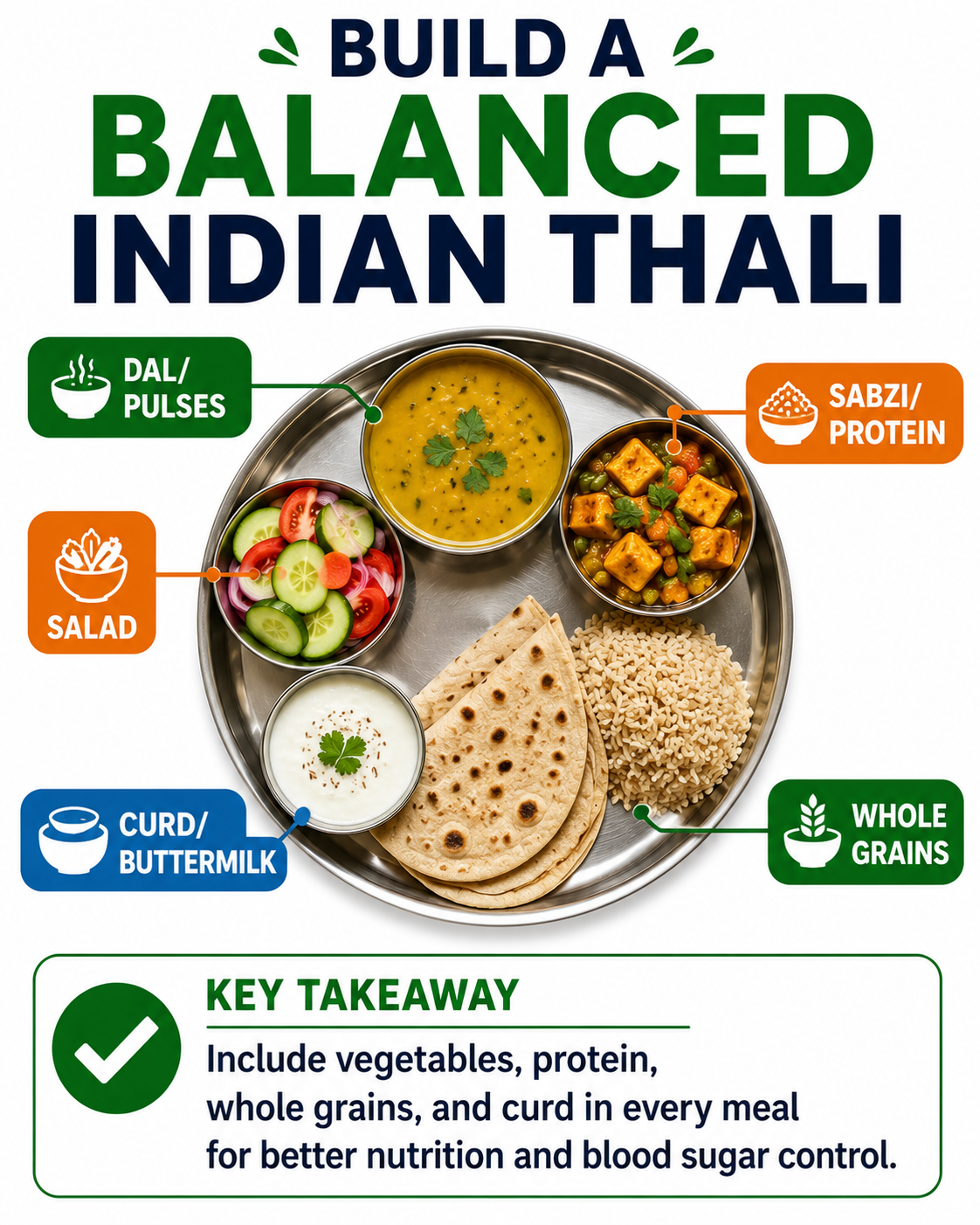
- To begin, fill half of your plate with vegetables and fruit, then add one quarter with pulses or other proteins, and one quarter with cereals or millets.
- Follow the 50% millet rule for Indians, which means that half of your cereal intake should come from millets.
Key takeaways
- Visit a dietician regularly, every 3 to 6 months initially and annually thereafter.
- A qualified nutritionist should prepare a meal plan based on Type, Amount, and Frequency (TAF).
- Consistent meal timings, portion control, and mindful eating together help maintain stable blood sugar levels
Conclusion
India is being recognised as a land of diverse food options. A diagnosis of diabetes mellitus may feel like a barrier to enjoying the diverse foods; However, it doesn't have to limit your ability to savour them. For instance, with the right dietary guidelines, people with diabetes can still enjoy all the flavours of Indian food culture. And therefore transform their association with food.
In conclusion, teach people simple tools like the diabetic plate method, indian thali system, the Indian food exchange list, and basic portion control methods. Instead of always emphasizing what to eat and what not to eat, let's also understand why to eat and how to eat.
FAQs
How often should people with diabetes eat food?
- People with diabetes should not skip meals because it can lower their blood sugar.
- Eat at regular times each day so your body stays in balance, and have small portions in the right amounts.
How important is losing weight for individuals with diabetes?
- Eating a lot of refined grains, processed foods, and sugary foods leads to a buildup of bad cholesterol and unhealthy fats in the body.
- This raises blood sugar, insulin levels, and insulin resistance.
- Keeping a healthy body weight is very important for people with diabetes.
References
-
RSSDI 2025 NUTRITION GUIDELINES FOR INDIVIDUALS WITH TYPE 2 DIABETES (Supported by ICMR - National Institute of Nutrition). (2025). International Journal of Diabetes in Developing Countries, 45(4), 1119–1324. https://doi.org/10.1007/s13410-025-01502-0
-
Tasty Recipes for People with Diabetes and Their Families. Published by the Centers for Disease Control and Prevention.Tasty Recipes for People with Diabetes and Their Families
-
ICMR–National Institute of Nutrition. (2024). Dietary guidelines for Indians—2024. Indian Council of Medical Research.
-
International Diabetes Federation. (2025). IDF Diabetes Atlas (11th ed.).
About the Author
Dr. Veena N J is a healthcare professional, medical writer, and health communications specialist with multidisciplinary experience in clinical care, telemedicine, health insurance, and medical content development. She combines clinical expertise, scientific research, and strategic communication to create evidence-based content that is accurate, accessible, and impactful. Her areas of interest include patient education, preventive healthcare, medical affairs content, healthcare journalism, and digital health communication.
Click on this link to connect with the author
Disclaimer:
The information provided in this article is for educational purposes only and is not intended to replace professional medical advice, diagnosis, or treatment. Always consult a qualified healthcare professional regarding any medical concerns or before making changes to your diet, lifestyle, or medications.


No comments:
Post a Comment