
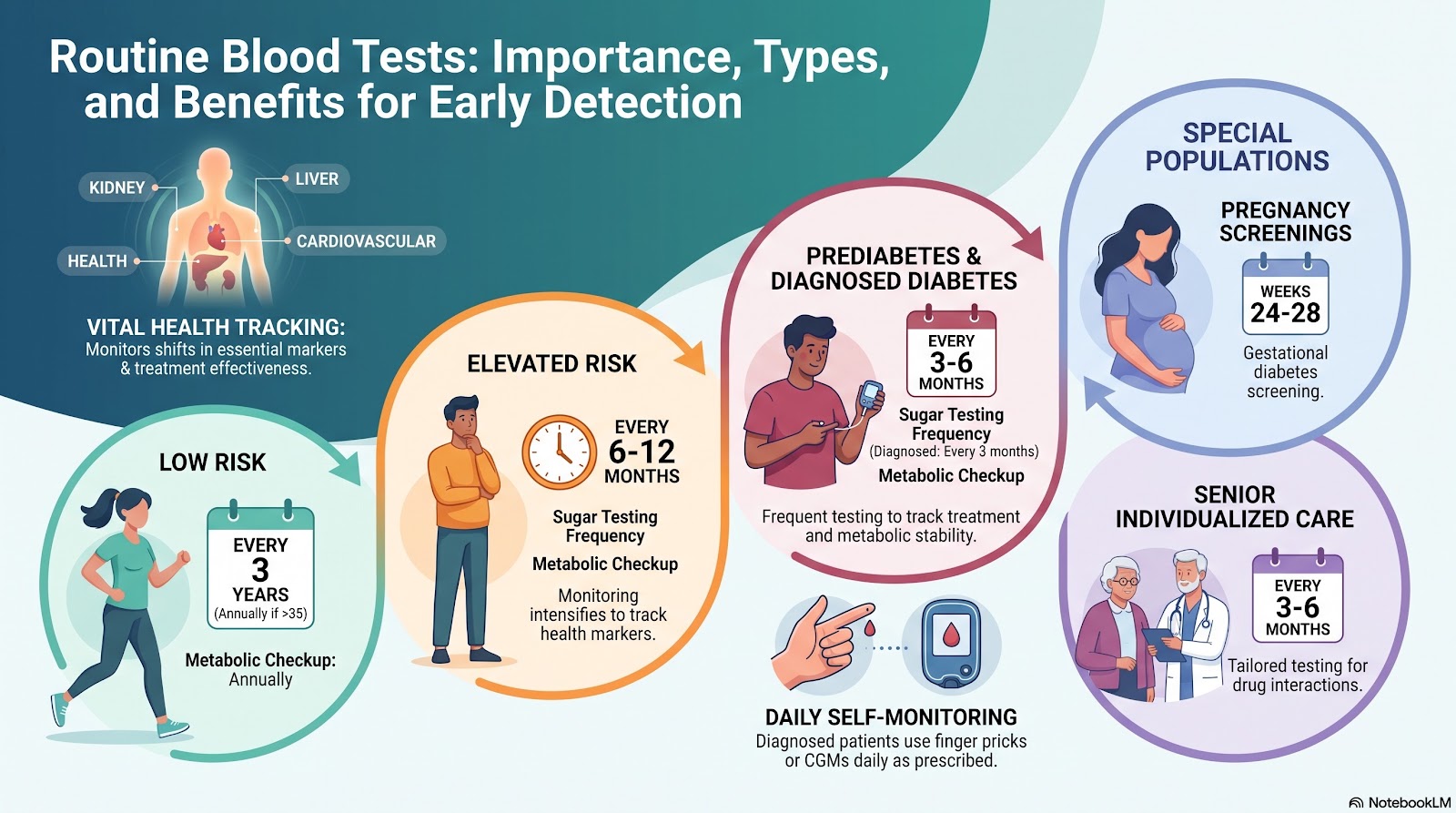
Routine blood tests are a simple and effective way to monitor your health. In fact, they can detect hidden problems even before symptoms appear. Today, diabetes and many other health conditions are becoming more common worldwide. Therefore, checking your blood sugar and health markers regularly is very important. So this guide explains how often you should get tested and why regular screening supports early detection and better health.
What Is Sugar Testing?
Sugar testing helps you understand how your body uses glucose, which is the main source of energy. Moreover, it includes several types of blood tests such as:
- Fasting Blood Sugar (FBS)
- Random Blood Sugar (RBS)
- Postprandial Blood Sugar (PPBS)
- HbA1c (Glycated Hemoglobin)
Each test provides different information. Some show your current blood sugar level, while others reflect long-term control over the past few months. Together, these tests help diagnose diabetes. In addition, they are useful for monitoring blood sugar levels over time.
What Is a Metabolic Lab Checkup?
A metabolic lab checkup gives a broader view of your overall health. Instead of focusing on one value, it looks at multiple markers.
A Basic Metabolic Panel (BMP) usually includes:
- Glucose
- Electrolytes (sodium, potassium, chloride)
- Kidney function (BUN, creatinine)
However, for a more detailed analysis, a Comprehensive Metabolic Panel (CMP) may be done.
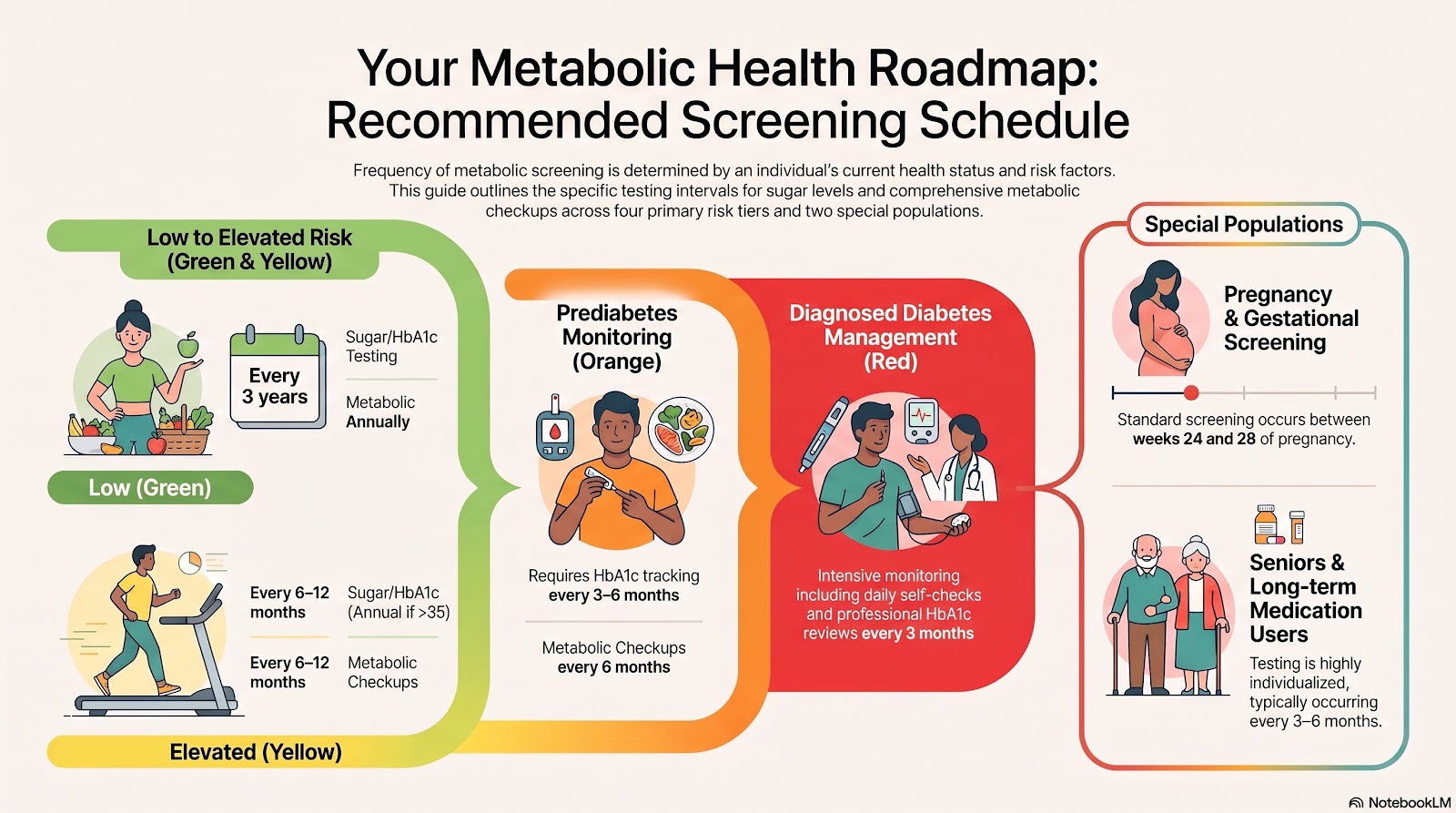
How Often Should You Get Sugar Testing & Metabolic Checkup ?
Signs You Should Get Routine Blood Tests Immediately
Recognizing early warning signs can help you take timely action.
- Frequent urination
- Excessive thirst or hunger
- Unexplained weight loss
- Persistent fatigue
- Blurred vision
Benefits of Taking Routine Blood Tests Regularly
- Early detection of diabetes or pre diabetes
- Reduced risk of complications
- Improved treatment outcomes
- Long -term cost savings in healthcare
Tips Before Getting Blood Tests
To ensure accurate results, keep these points in mind:
- Fasting requirements: Follow the recommended fasting period if advised
- Medication considerations: Check whether any medicines may affect results
- Best time for testing: Morning fasting tests are often preferred
- Choose a reliable lab: Ensure proper accreditation and accurate reporting
Conclusion
Routine blood tests are essential for maintaining long-term health. Therefore, they help detect problems early and allow timely treatment. Moreover, regular blood sugar testing and metabolic checkups reduce the risk of serious conditions. Therefore, make routine blood tests a part of your healthcare plan. For best results, consult a healthcare professional for personalized testing recommendations.
References
American Diabetes Association – https://diabetesjournals.org
U.S. Preventive Services Task Force – https://www.uspreventiveservicestaskforce.org
National Institute of Diabetes and Digestive and Kidney Diseases – https://www.niddk.nih.gov
Association for Diagnostics & Laboratory Medicine – https://www.myadlm.org
About the Author
M.H.F.Nuha is a Medical Laboratory Science graduate and healthcare writer passionate about making medical information accessible and understandable. She combines her background in laboratory medicine and research with evidence-based writing to create informative health content.


No comments:
Post a Comment