
How many times have you felt frustrated when an advertisement interrupted your favourite song? Yet the same product feels more interesting when a creator recommends it. This shift shows how social media has become a platform for sharing knowledge and lifestyles, building communities, and even creating careers. Social media has changed everything. Millions of people create content every day. Some entertain, some teach, and some build businesses. Today, content creation has evolved from a hobby into a career. But how did content creation and the creator economy become one of the world's fastest-growing career paths? Is it only about fame and identity, or is it changing the way we learn to connect with others?
The desire to be heard
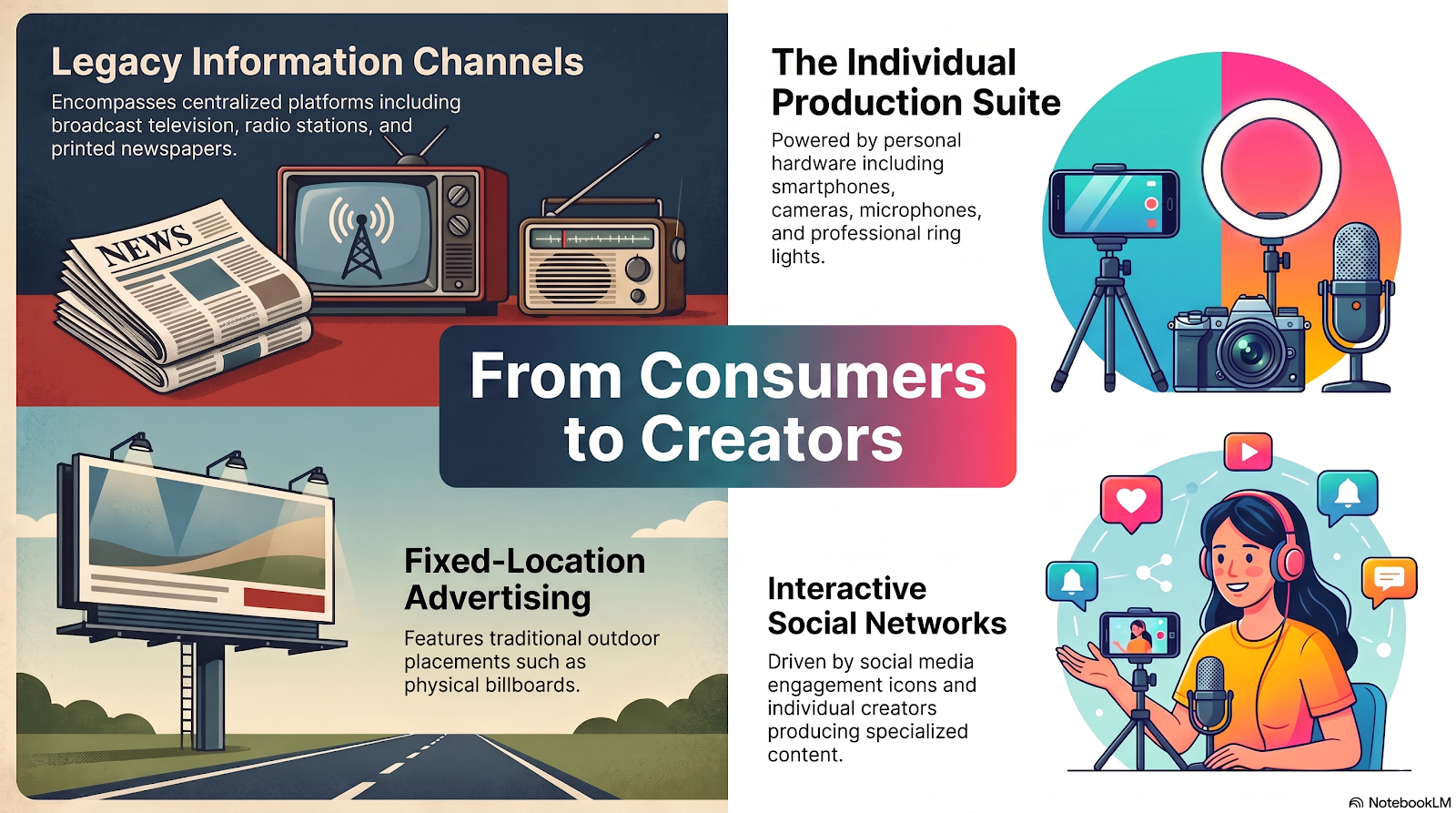
Everyone wants a voice. Long before social media, we expressed ourselves through stories, books, poetry, and art. The desire for recognition has always existed. Social media gave everyone a platform to express themselves. As internet access grew, people created blogs and personal websites. These platforms gave individuals a place to publish ideas. These platforms later evolved into social media apps. This transformed content sharing to global communication. Ideas could now reach people within seconds. Social media just simplified the way to be heard. Today, anyone with a skill or story can reach an audience. People no longer need to wait to be discovered. They can easily share their ideas with the world.
From Hobby to profession and creator economy
How did content creation and the content economy become a career instead of just a way to share information? First, technology made editing platforms and made microphones and cameras accessible to everyone. Then, faster internet made connectivity easier. As a result, social platforms connected people across the world with a follow button. The internet and smartphones removed the need for publishers and production studios. Today, an idea is enough to start creating content. Anyone can upload it and join the creator economy.
As the audience grew, brands were credited with ad revenue and affiliate marketing with online courses and bootcamps from many sources. Consequently, the creator economy became profitable. Affordable access and flexible usage make it more attractive, and this became a strong foundation for sharing digital content across the world, turning content into building businesses with individuals' own knowledge and skills. Once what began as a hobby is now a full-time profession. Today, hobbies and talents can become careers. They help people share knowledge and creativity and build communities.
Why we trust Creators more than advertisements
Why trust an influencer rather than an ad about the same product? The biggest shift lies in trust, where creators share honest experiences, making it the biggest strength of the creator economy. They just don't recommend it; instead, they explain how the products helped them. Sometimes they show the comparison so viewers can understand the differences. Moreover, they make products part of their daily lives. A protein powder seems more interesting when a gym freak speaks about it. Just like how we question when a stranger recommends something but follow when a friend suggests. Over time, people see creators everyday or every week. They watch honest reviews and replies to comments. This creates familiarity without meeting them in person.
According to the 2026 Influence Marketing Benchmark Report, 87.49% of respondents expect an increase in their influence marketing budgets. Long- and short-form videos remain the most effective. How brands entrust content creators with marketing is because they see value in it. This shows the shift of influencer marketing from an emerging experimental channel into a core growth lever and an industrialised "operating system" for brands in 2026. Today brands reach consumers through creators they trust.
The Psychology of Endless Scrolling
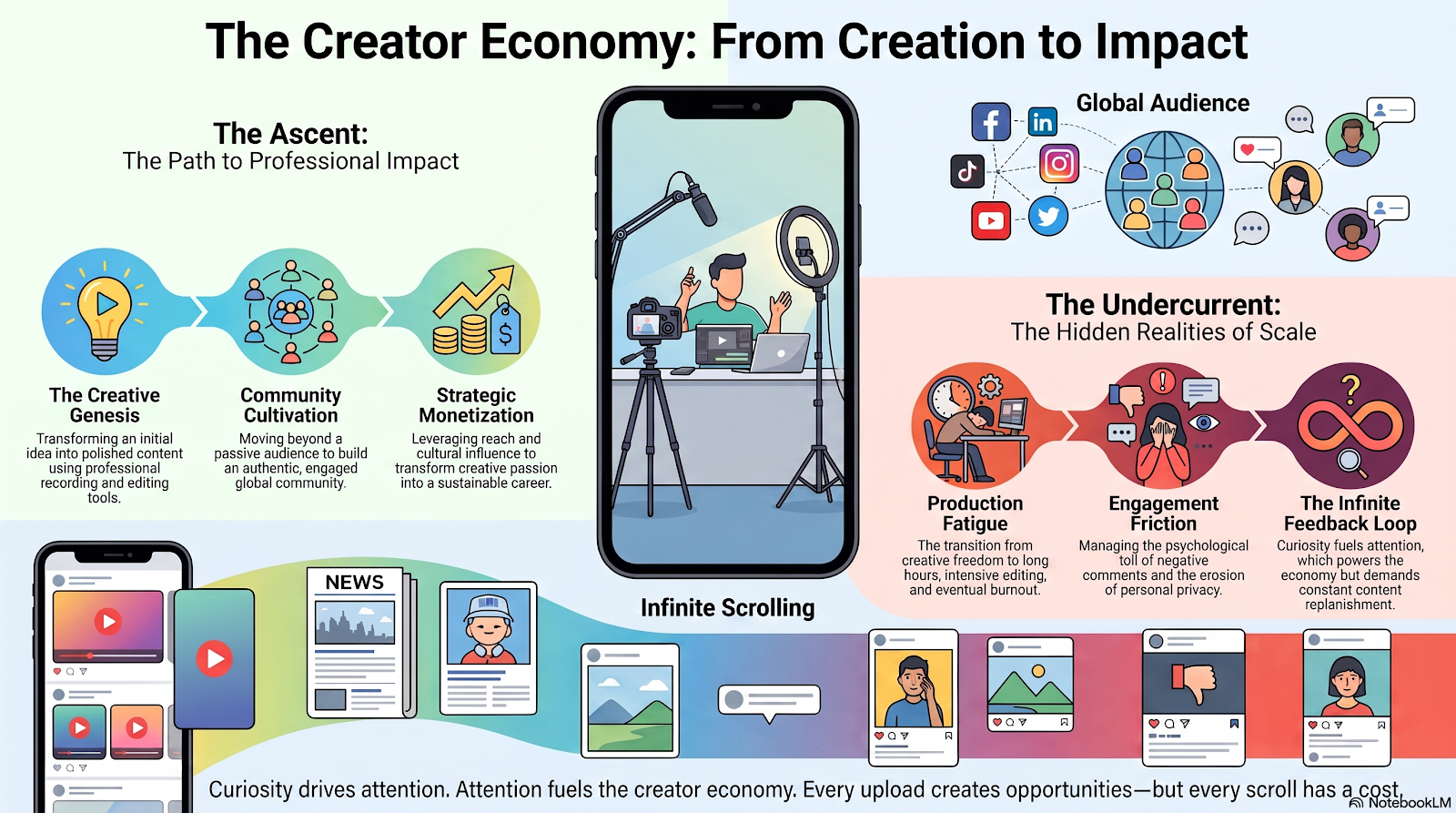
When did you realise that you went onto social media for a relaxation of 5 minutes and ended up there for an hour? This is something we need to bring to notice within ourselves. Today, social media never runs out of content. People upload new content every minute. As a result, many people keep checking new trends, updates and breaking news, which often keeps us hooked on social media. To illustrate, think about why bright colours catch attention easily. How do you feel in that state? Similarly, social media works in the same way. Therefore, every refresh brings something new. It keeps curiosity alive, encouraging endless scrolling unless you set a timer. Every time you refresh, you get new feeds and suggestions that keep you visibly inside the platforms. Meanwhile, search algorithms learn from your likes, searches and shares. They recommend content and keeping your attention.
Eventually, we may stay glued to our phones and ignore the world around us. Constant scrolling leaves us mentally drained and reduces focus abilities. The more time is paid for, the more attention is gained. According to a report, there are 6.12 billion internet users worldwide, accounting for 73.8% of the global population. The average user spends 33 hours and 13 minutes online each week. Technology created new opportunities, but many left competing for our attention. This constant competition for attention has become a defining feature of the creator economy, often determining success.
The Hidden Costs
We often see many people speaking in front of the camera, but how many know the struggles behind them? In reality, creators don't speak without preparation; every piece of content begins with planning and research. A creator sits with a book, pen and internet. They gather all information, organise ideas and turn them into a clear 30-second video. Moreover, this process takes time. It becomes harder for creators who manage content along with studies or full-time jobs. Let's say your favourite series suddenly stopped without any explanation. Most viewers wonder why. Creators face similar expectations with audiences.
Meanwhile, algorithm rewards consistent posting. A sudden change in topic may reduce engagement and disappoint viewers. However, not every creator gains public interest; the fear of losing followers is real, a real nightmare for creators. Sometimes, creators are pushed to promote unused products or undisclosed sponsorships. This damages their creditability. For many creators, losing followers can feel like losing a community they spent years of building. Once a creator shares personal moments, separating private and public life becomes harder. So if you think a blogger's, influencer's or creator's lifestyle is easy and stress-free, understand they too strive to balance creativity, business, expectations, relevance and well-being. Finally, a thoughtful suggestion helps creator grow far more than a harsh comment
Where Do We Go From Here?
The creator economy is no longer a trend. It shapes how we learn, work, communicate and make decisions every day. Today, AI tools help creators generate ideas, organise content, solve problems and edit their work. AI has become a valuable tool supporting human creativity. As a result, today many professionals share knowledge and experience through content creation. They build trust and strengthen their personal brands If you still think content creation belongs to a separate industry, think again. It has become a part of almost every profession. They are keeping the spark of knowledge alive. So if you had a voice today, how would you use it? The future isn't about fame. It's about something worth listening to.
Key Takeaways
- Creator economy is redefining careers.
- Trust matters more than promotion.
- Every creator's journey involves unseen effort.
- Mindful content creation and consumption are equally important.
- Value creates lasting impact.
Thank you for reading this article!
Reference
https://influencermarketinghub.com/influencer-marketing-benchmark-report/
https://datareportal.com/global-digital-overview
About the Author
Priya Varshini S is a biotechnology graduate with a passion for research, lifelong learning, and content writing. They enjoy exploring diverse topics, continuously learning, and transforming ideas into clear, engaging, and reader-friendly content.


No comments:
Post a Comment