
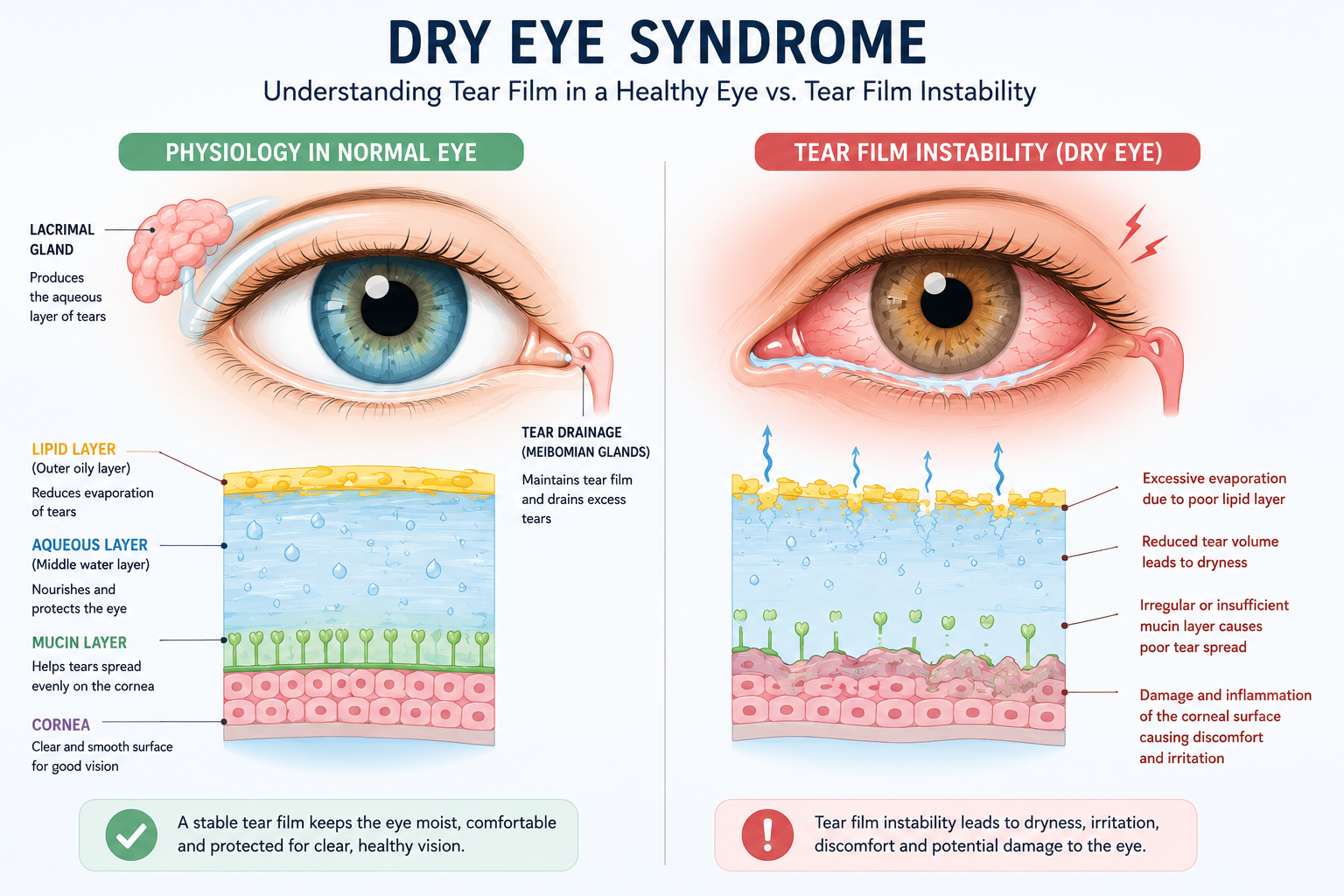
Do your eyes often feel dry, itchy or as if there’s something stuck in them? These could be the signs of dry eye syndrome. It is a common condition which can interfere with daily activities such as reading, working, driving and using digital devices.
Understanding the symptoms and treatment is essential for maintaining healthy vision and preventing further prognosis of the condition. This condition occurs when the eyes do not produce enough tears or when tears evaporate quickly. It affects an estimated 1 in 3 people globally.
In this article, you’ll learn about the symptoms, causes, diagnosis, treatment and effective home remedies for the management of dry eye syndrome and protecting your eye health.
Overview
What is dry eye syndrome?
Dry eye syndrome is a common ocular surface disease causing discomfort in the eye and visual disturbances. It is characterised by instability in the tear film, resulting in reduced production or increased evaporation of tears, leading to inflammation and damage to the surface of the eye. Tears are essential for providing moisture and protecting against infections to the eye.
Common Symptoms
- Stinging and burning sensation in the eyes
- Sandy or Foreign body sensation
- Eye pain and irritation
- Excessive tearing
- Redness
- Blurry vision and difficulty in reading
- Twitching of the eyelid
- Excessive blinking.
Causes and Risk Factors
There are multiple causative factors leading to Dry eye syndrome, which can be both internal and external. Common risk factors include,
- Environmental factors - extreme weather conditions, exposure to pollutants
- Increased exposure to screen time
- Advancing age
- Previous ocular surgeries such as LASIK
- Nerve damage
- Autoimmune diseases- eg, Sjögren’s syndrome
- Behavioural factors- cigarette smoking
- Usage of eye accessories like contact lenses
- Administration of certain topical eye drops
Risk Factors
Although ageing is one of the common risk factors for dry eye syndrome, other metabolic factors also contribute to the manifestation of dry eye syndrome. Which include,
- Diabetes Mellitus
- Hormonal imbalance
- Inadequate blinking while using digital devices.
- Certain medications such as antihistamines, beta-blockers.
- Vitamin A deficiency
Understanding the causes and risk factors can help in early diagnosis of the disease and provide better management.
Diagnosis of Dry Eye
Dry eye syndrome cannot be diagnosed just by the symptoms the patient experiences, as dryness of the eye can also occur secondary to certain metabolic or other eye diseases. To clinically confirm that the symptoms occur due to impaired tear production or evaporation, certain diagnostic tests must be conducted. Some of the common diagnostic tests used clinically are,
- Schirmer test - Most commonly used to measure tear production. In this test schirmer strips are inserted into the lower eyelid, and the total tear secretion is recorded by the length of the wetting of the strip.
- Fluorescein staining - It is used to identify damage in the corneal layer. The surface of the cornea is stained, and it can show patterns of disruption in the corneal layers, which can be used to analyse the cause of dry eye.
Other tests include:
- Rose Bengal staining
- Lissamine green staining
- Tear function index
- Tear break-up time
Management
Avoiding the known causative factors plays a key role in the management of dry eye syndrome. Such as
- Reducing the screen time
- Avoiding the medication that causes the symptoms
- Avoiding long term exposure to extreme weather conditions.
Treatment Methods
- Administration of artificial tears.
- Anti-inflammatory drugs
- Topical corticosteroids
- Maintaining eyelid hygiene
- Hot compresses over eyelids
- Eye lid massage
Medical Procedures
When standard topical treatment methods for dry eye do not provide adequate relief to the patient, surgical procedures are done to improve the condition. Which include:
- Punctal occlusion
- Partial or total tarsorraphy
- Amniotic membrane transplantation
- Salivary gland transposition
Home care remedies
Simple activities can be done for the management and prevention of dry eye syndrome at home. It includes
- Hot compression over the eyelids with warm hands
- Frequently washing eyelids and maintaining eyelid hygiene.
- Increasing the blinking rate
- Using indoor humidifiers
Dietary changes like
- staying well hydrated
- Consumption of an omega-3 fatty acid diet - eating oily fish, walnuts or supplements.
- Vitamin A-rich diet- adding citrus fruits, carrots
- Minimise the habit of consuming processed foods.
- Avoid alcohol consumption
It will be beneficial to support the treatment methods.
Prevention Of Dry Eye Syndrome
Although dry eye can occur due to many factors, a habit of taking preventive measures will be effective in reducing the chance of occurrence of the condition.
- Performing eye exercisescan be beneficial not only in prevention of dry eye, but also in various other eye diseases.
- The 20-20-20 rule - Taking a break every 20 minutes of screen time to look 20 feet away for 20 seconds.
- Wearing eye wear to protect from sunlight and windy or dusty conditions.
Conclusion
Dry eye syndrome is a very common eye disease that significantly affects the quality of life, if untreated. Understanding the symptoms and following adequate treatment and preventive measures are important in the management and long term protection of the eye. If symptoms persist even after standard methods, eye surgery may be done as a last resort to improve the condition. Stop ignoring persistent eye discomfort and start adopting healthy eye care habits for long term vision.
References
- American Academy of Ophthalmology. (2024). Dry eye syndrome. https://www.aao.org/eye-health/diseases/what-is-dry-eye
- Phadatare, S. P., Momin, M., Nighojkar, P., Askarkar, S., & Singh, K. K. (2015). A comprehensive review on dry eye disease: Diagnosis, medical management, recent developments, and future challenges. Advances in Pharmaceutics, 2015.
- Messmer, E. M. (2015). The pathophysiology, diagnosis, and treatment of dry eye disease. Deutsches Ärzteblatt International, 112(5)
About the author:
Devinanadana RK is a BAMS intern and healthcare content writer with an interest in creating evidence based and reader friendly content.
Disclaimer: This article is for informational purpose only. Please consult a qualified healthcare provider for diagnosis and treatment.


No comments:
Post a Comment