
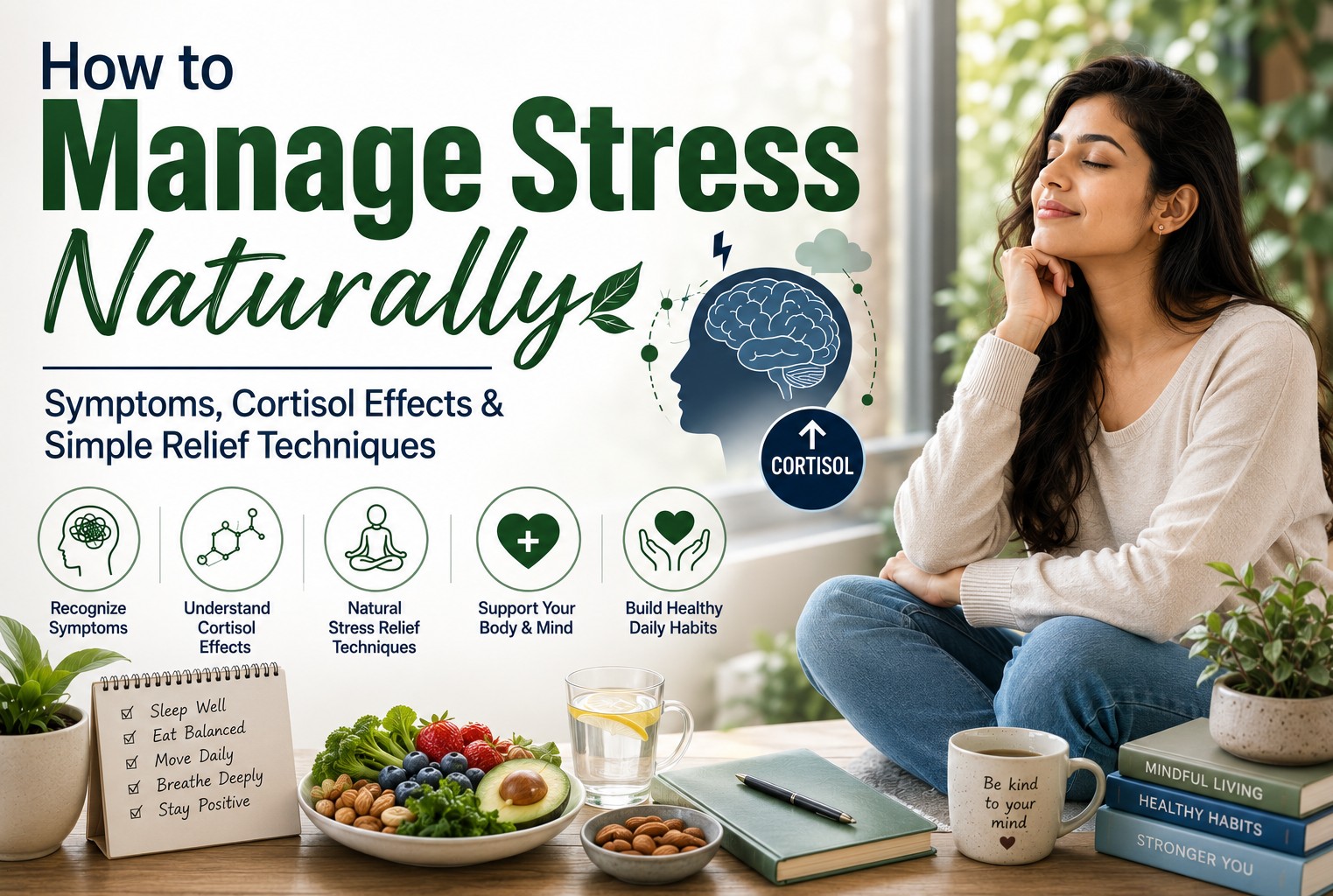
Have you ever felt tired, tense, or unable to relax even after sleeping well? These feelings are common signs of stress. Stress is the body’s natural reaction to challenges. It affects your thoughts, emotions, and physical health. Short‑term stress can help you stay alert. However, long‑term stress may harm your body and mind. Therefore, learning to manage stress naturally can help support physical, mental, and hormonal health. Additionally, learning about stress symptoms can help you manage stress better.
Common Symptoms of Stress You Should Recognize
Stress shows up in different ways. These symptoms may appear slowly or come on suddenly. For example, common symptoms include:
-
Physical symptoms: Tiredness, low energy, headaches, body pain, digestive problems, sleep difficulties, increased heart rate, and restlessness.
-
Emotional and mental symptoms: Feeling anxious, worried, irritable, unfocused, overwhelmed, and less motivated
-
Behavioral changes: Changes in eating habits, avoiding social activities, and increased intake of caffeine and unhealthy habits.
Moreover, long-term stress can also worsen existing health conditions and affect day-to-day activities.
The Science Behind Stress: How Cortisol Affects Your Body
Cortisol is the body’s main stress hormone. It increases during stressful situations and helps the body stay alert. In addition, cortisol supports energy, metabolism, blood sugar, and immune function. During stress, it releases glucose for quick energy. However, high cortisol levels over time may cause poor sleep, increased hunger, weight gain, and hormone changes.
Ways to Manage Stress Naturally and Lower Cortisol Levels
1. Prioritize Quality Sleep
Good sleep helps regulate cortisol levels and supports the body in controlling stress. So, aim for a regular sleep schedule. In addition, create a calming bedtime routine, and reduce screen use before bed to improve sleep quality.
2. Practice Mindfulness and Relaxation Techniques
Relaxation techniques can help to calm the nervous system and reduce stress. For example, Deep breathing, meditation, prayer, journaling, and muscle relaxation activities can promote a sense of calm and emotional balance.
3. Exercise Regularly
Regular exercise reduces stress hormones and improves mood. Simple activities like walking, yoga, stretching, and strength exercises can support stress management. However, excessive exercise may add physical stress to the body.
4. Eat a Stress-Supporting Diet
A balanced diet provides nutrients needed for stress control and overall health. Include protein-rich foods, fruits, and vegetables adequately. Moreover, limit caffeine and processed foods to help reduce stress.
5. Support Your Body With Healthy Daily Habits
Small daily habits can help to manage stress naturally. For instance, stay hydrated, spend time outdoors, maintain supportive relationships, take regular breaks, and set healthy boundaries to protect your mental and physical health.
When Stress Becomes a Health Concern
Stress can become a health concern when it starts affecting a person's normal functions. Warning signs may include constant tiredness, difficulty focusing, disturbed sleep, physical symptoms, irritation, and reduced interest in day-to-day activities. Additionally, when these symptoms increase over time, consulting a professional for guidance is important. This will be useful for coping with stress and reducing the risk of long-term effects. Furthermore, managing stress supports overall wellness. That is to say, it will help maintain hormonal balance, immune health, and emotional stability. Above all, Early recognition and effective stress management play a key role in protecting long-term physical and mental health.
Conclusion
In conclusion, stress cannot always be avoided. However, healthy habits can help the body and mind respond better to challenges. Focus on small, regular steps rather than perfect results. For example, simple practices such as maintaining good sleep habits, practicing relaxation techniques, eating a balanced diet, staying physically active, and creating healthy boundaries can help to manage stress naturally. By focusing on realistic changes that fit into daily life, stress management becomes easier to maintain and more effective over time. These positive habits help to cope with stress, improve overall well-being, and reduce the impact of ongoing stress on health.
References
-
American Psychological Association. (n.d.). Stress. https://www.apa.org/topics/stress
-
Centers for Disease Control and Prevention. (n.d.). Sleep and sleep hygiene. https://www.cdc.gov/sleep/index.html
-
Cleveland Clinic. (n.d.). Stress. https://my.clevelandclinic.org/health/articles/11874-stress
-
Cleveland Clinic. (n.d.). Gut health and stress. https://health.clevelandclinic.org/gut-health-and-stress/
-
Harvard T.H. Chan School of Public Health. (n.d.). Stress and health. https://www.hsph.harvard.edu/nutritionsource/stress-and-health/
-
Headspace. (n.d.). Science of meditation. https://www.headspace.com/science
-
Healthline Editorial Team. (n.d.). Stress symptoms. https://www.healthline.com/health/stress-symptoms
-
MedlinePlus. (n.d.). Stress. https://medlineplus.gov/stress.html
-
National Institute of Mental Health. (n.d.). Find help. https://www.nimh.nih.gov/health/find-help
-
Sleep Foundation. (n.d.). Stress and sleep. https://www.sleepfoundation.org/mental-health/stress-and-sleep
-
UCLA Mindful Awareness Research Center. (n.d.). Mindfulness resources. https://www.uclahealth.org/programs/marc
-
World Health Organization. (n.d.). Mental health. https://www.who.int/health-topics/mental-health
-
World Health Organization. (n.d.). Stress. https://www.who.int/news-room/questions-and-answers/item/stress
-
Cleveland Clinic. (2025, February 17). Cortisol: What it is, function, symptoms & levels. https://my.clevelandclinic.org/health/articles/22187-cortisol
About the Author
M.H.F.Nuha is a Medical Laboratory Science graduate with a passion for healthcare communication and patient education. With a background in clinical laboratory sciences, she writes evidence-based health articles that help readers better understand medical conditions, laboratory tests, preventive health, and wellness topics. Her goal is to make complex medical information simple, accurate, and accessible for everyone.


No comments:
Post a Comment