
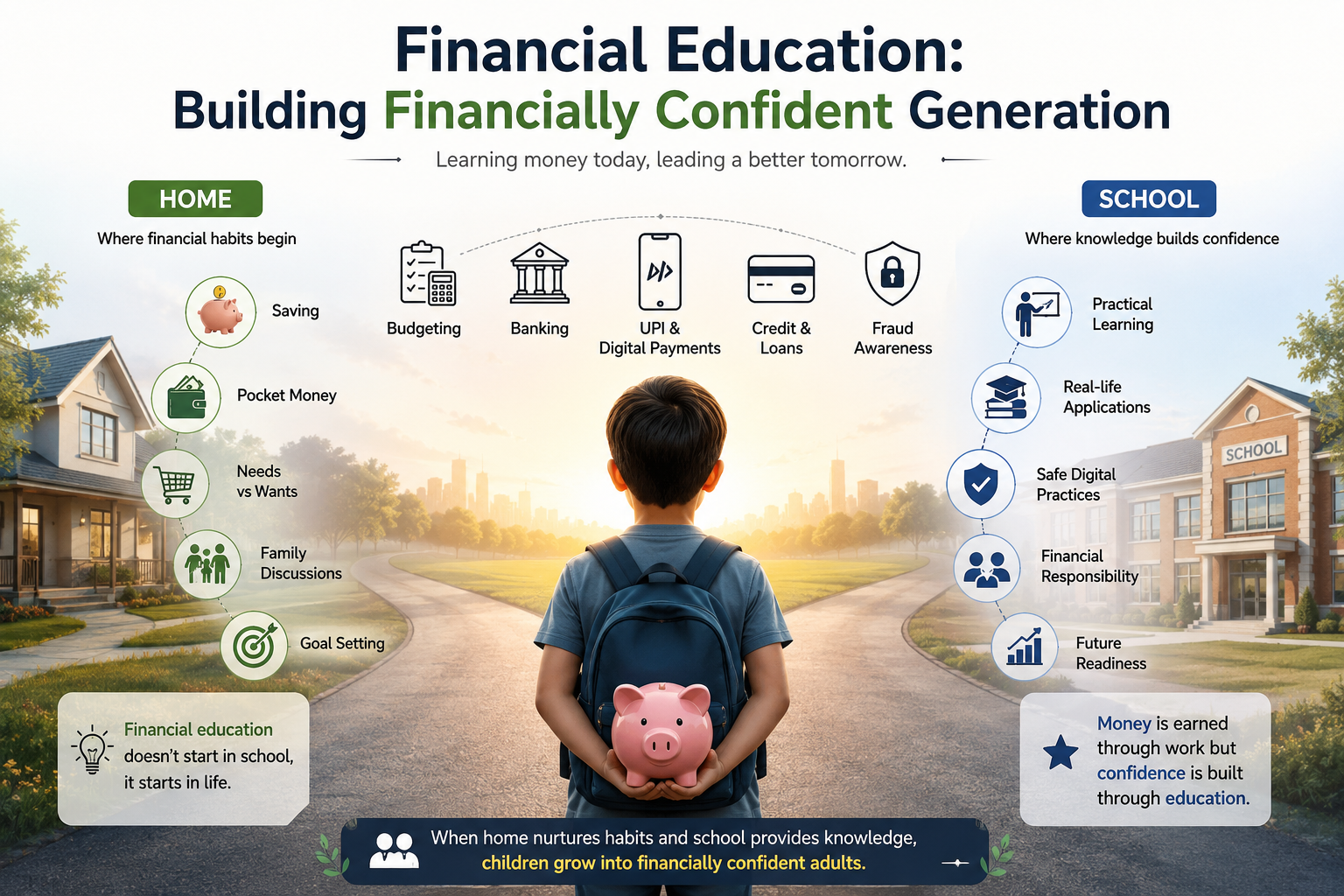
We were taught to solve mathematical problems, but when did we learn to solve financial ones? Money plays an important role in everyone's life. Financial education is becoming one of the most important life skills, yet it is rarely taught alongside traditional academic subjects. From school fees to bills to subscriptions to groceries, we need money to pay for everything. Financial education teaches us how money works. This includes saving, budgeting, loans, taxes, and smart financial decisions. Financial management is more than a skill; it's essential knowledge that helps young adults avoid financial mistakes. Home builds a foundation for financial habits, while schools strengthen them. Hence, financial education at both home and school plays an important role in a kid's financial confidence. Let's explore the importance of early financial education and the lessons that shape you for real life.
The Financial Skills Everyone Should Learn
Money is a powerful tool if managed properly. But how do we manage it? Imagine you are a young adult who received your first salary – a proud moment, right? But you want to utilise this amount properly so you don't end up in any problems. The first step is creating a budget. It helps divide money into spending and savings. Expenses include the bills, rent, and subscriptions. Savings can be set aside for emergencies or to support long-term goals. Where do we keep them? In banks, which help people to store and manage money safely.
Today, most payments are digital. People make payments through UPI, net banking, and debit cards, with awareness of online fraud. However, the Unified Payments Interface (UPI) achieved a record-breaking transaction value of over US$ 312 billion in May 2026, driven by rapid growth in digital payments and responsible digital transactions. You want to buy something but don't have enough money; a credit card provides short-term flexibility, and delayed payments can lead to interest charges. What if you want to buy something but cannot afford to pay the full amount at once but can pay some amount monthly? That's where loans come in. Proper guidance on loans and interest helps young adults borrow responsibly and avoid unnecessary debt.
Scammers may pretend to be bank representatives and ask for OTPs, passwords, or card details. Banks never ask to share any confidential information. Financial knowledge helps to understand how financial scams happen and how to avoid them. These skills become easier to understand through financial education. Parents can teach simple financial habits such as budgeting, saving, and making spending decisions. Schools can help to develop healthy relationships with money by teaching financial planning, digital payments, banking, loans, and scam awareness. Together, they can prepare students to make smart financial decisions.
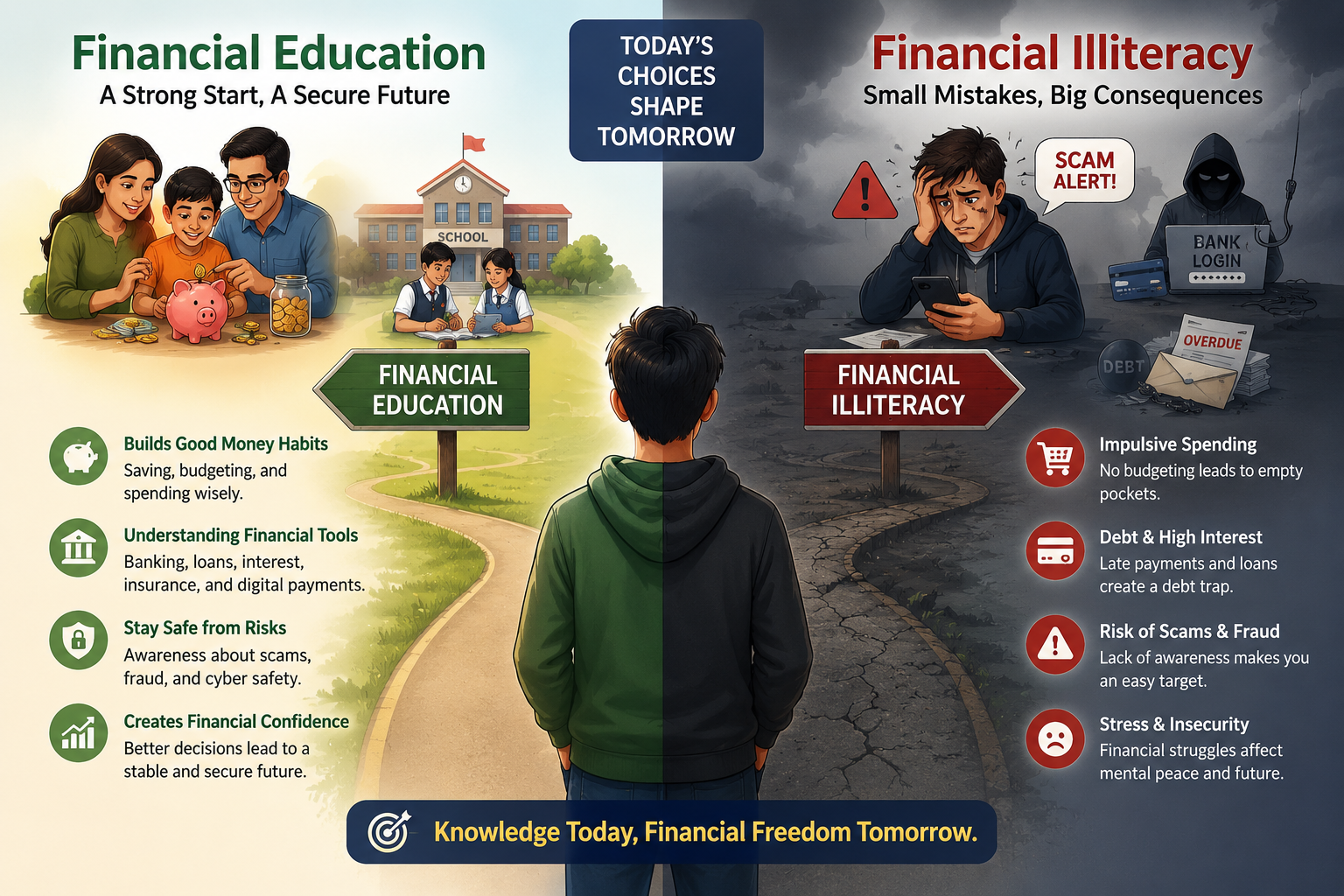
The Cost of Financial Illiteracy
Imagine you have just received your first salary. You feel excited to buy everything on your bucket list. At first, a few unplanned purchases seem harmless. Slowly, your savings start to disappear. Then the monthly bill arrives. To cover the shortage, you rely on a credit card. You miss a few repayments, which incur interest charges. When you think everything is under control, a scammer pretends to be a bank representative and tricks you into sharing confidential banking information.
Many parents hesitate to discuss money, as they believe financial topics are too complex for their children. Schools often focus on academic subjects, leaving little room for practical financial education. Financial education prepares young people before mistakes happen. Parents can help children understand the value of money. Schools can create awareness about online scams and safe digital transactions, preparing students for a cashless world. Early financial education at home and school equips children with the knowledge and confidence to face real-world financial challenges.
Where Financial Education Begins
Parents and schools play equally important roles in shaping a child’s financial understanding. At home, many children receive pocket money as their first experience with handling money. This teaches them the value of earning, saving, and spending. A piggy bank builds the habit of saving, while casual conversations about shopping help kids sort out what is needed versus what is just desired. As they grow, parents can involve them in simple budgeting discussions, so they see how money is arranged and used inside the family.
Schools, on the other hand, can reinforce these habits with hands-on financial activities. In class, students can do budgeting exercises and even banking so they learn how to handle money responsibly, rather than memorising terms. Teachers can introduce ideas such as taxes, loans, interest, insurance, and digital payments little by little, using examples drawn from real life. Also, talking about online scams, cyber fraud, and safe digital transactions can prepare students for a world where cashless payments are normal. Together, parents and schools can help children build lifelong financial habits and make informed financial decisions.
Building a Financially Confident Generation
Financial education doesn't begin at a certain age. It starts at home, with those little habits kids pick up from their parents, even if it feels small at first. Then school steps in, sort of reinforcing it, by going into useful things like budgeting, banking, loans, interest, digital payments, and also fraud awareness. As technology keeps changing, financial learning also has to change with it. Today, UPI, digital wallets, AI-based budgeting apps, and online banking have shifted the way we handle money. So being financially aware matters more.
Money comes from work, but financial confidence comes from education. When families build good money routines, and schools add practical knowledge, children can grow into adults who are more responsible, able to earn, save, spend, and choose wisely with confidence. If we prepare children for exams, shouldn't we prepare them to manage their money with confidence?
Key Takeaways
-
Financial education begins at home and grows in school.
-
Budgeting and saving are lifelong money habits.
-
Understanding banking, loans, and digital payments helps prevent costly mistakes.
-
Financial awareness helps protect against scams and fraud.
-
Financial confidence grows through continuous learning and responsible decisions.
Reference
India Brand Equity Foundation (IBEF) – UPI transaction statistics: https://www.ibef.org/news/upi-transactions-soar-to-record-us-312-21-billion-in-may
About the Author
Priya Varshini S is a biotechnology graduate who enjoys learning, writing, and exploring ideas across science, technology, finance, and everyday life. Through articles, they aim to make complex topics simple, relatable, and meaningful for readers.
Thank you for reading!
Every step toward financial education is a step toward a more confident future.


No comments:
Post a Comment