
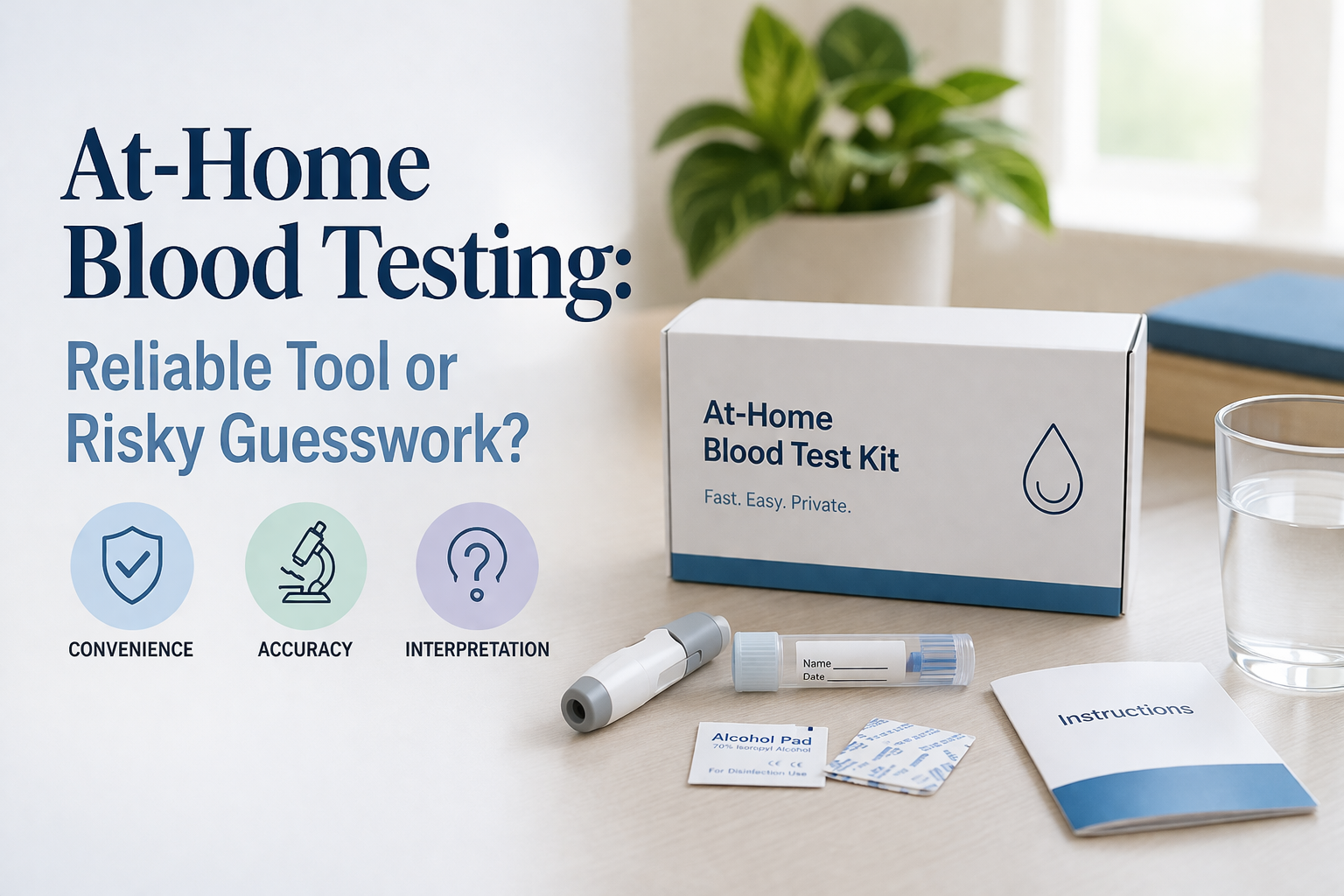
Source: ChatGPT
It all started with a small box.
A neatly packed, well-presented, and attractive box containing an at-home blood glucose test kit, I had ordered after weeks of running around labs and diagnostic centres. The kit promised something simple yet powerful: quick health insights from the comfort of home. And with senior citizens in the family, it felt like a practical and reassuring solution.
“Just a finger prick,” it read. “Quick results. Take control of your health.”
It's no wonder that these at-home blood test kits are becoming increasingly popular. But my experience taught me that while they empower, they also require caution.
When Do At-Home Test Kits Truly Help?
-
For Routine Monitoring
At-home tests truly help when it comes to routine monitoring, especially for health conditions like diabetes, thyroid disorders, or cholesterol levels. They allow individuals to track changes regularly without frequent clinic visits, making healthcare more convenient and consistent.
-
For Accessibility
At-home test kits are an essential first step toward diagnosis in areas with inadequate healthcare infrastructure. They make essential health information more accessible to underprivileged communities.
-
For Privacy and Comfort
At-home tests offer a discreet, stress-free option to monitor health from the comfort of one's own home. This sense of privacy can be especially comforting for people who are nervous or hesitant about clinical visits.
-
For Early Awareness
At-home kits help raise early health awareness by facilitating initial screenings. They can help detect potential deficiencies or imbalances such as anaemia, thyroid, or cholesterol levels before symptoms become critical.
When Can At-Home Test Kits Be Misleading?
-
User Error
The primary risk to accuracy in home testing is user error. Insufficient samples, clotting, smearing, or misreading faint lines can turn 'normal' results 'concerning.'
-
False Reassurance
At-home testing might provide false reassurance; a mildly aberrant result may be ignored or misread as unimportant, causing individuals to delay seeking medical assistance and potentially hinder prompt diagnosis and treatment.
-
Unreliable Test Types
Not all at-home tests offer the same level of accuracy or clinical reliability. Factors such as poor validation, sampling errors, timing, and individual differences can affect results; therefore, professional guidance is essential.
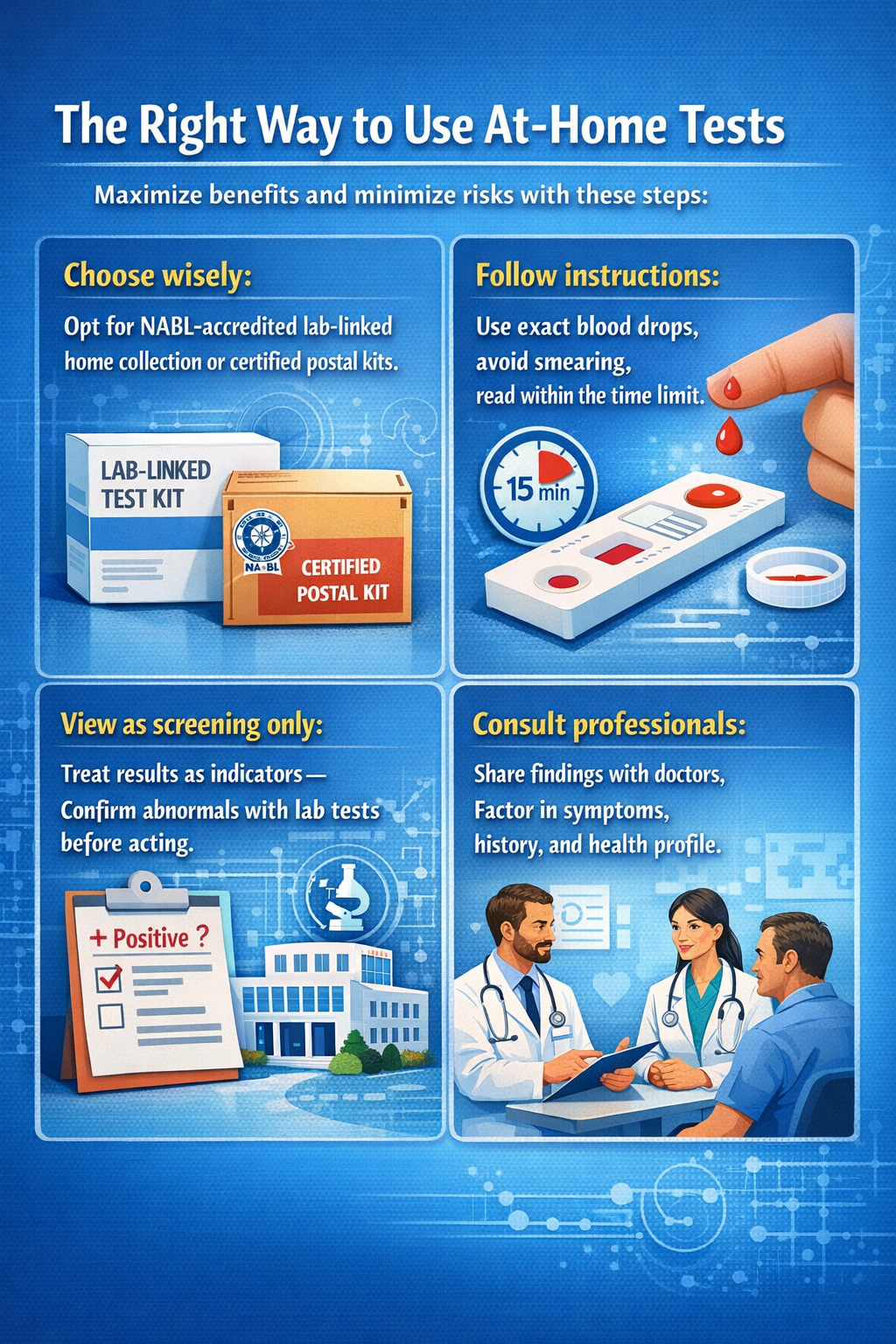
My Verdict
After using the kit for a few months, I began to see both its strengths and its limits. It became a helpful tool for tracking small changes and staying aware of our health, especially on busy days when visiting a lab felt difficult. At the same time, I realised that not every reading told the full story.
The kit still sits in my cabinet, but now it serves as a reminder rather than a substitute. It may start with convenience at home, but it should always be backed by professional care. At-home tests can guide and inform, but they cannot replace expert interpretation. Ultimately, true accuracy goes beyond the numbers; it’s about understanding their personal significance for our health.
Source: ChatGPT
The Source Trail:
-
Tidy EJ, Shine B, Oke J, Hayward G. Home self-testing kits: helpful or harmful? British Journal of General Practice. 2018;68(673):360–1. Available from: https://pmc.ncbi.nlm.nih.gov/articles/PMC6058634/
-
Self-testing implementation toolkit for HIV, hepatitis C and syphilis. World Health Organisation. Available from: https://www.who.int/tools/self-testing-implementation-toolkit-for-hiv-hcv-and-syphilis
-
Indian Council of Medical Research. National Essential Diagnostics List. 2019. Available from: ttps://www.icmr.gov.in/icmrobject/custom_data/pdf/resource-guidelines/NEDL_2019.pdf


No comments:
Post a Comment