
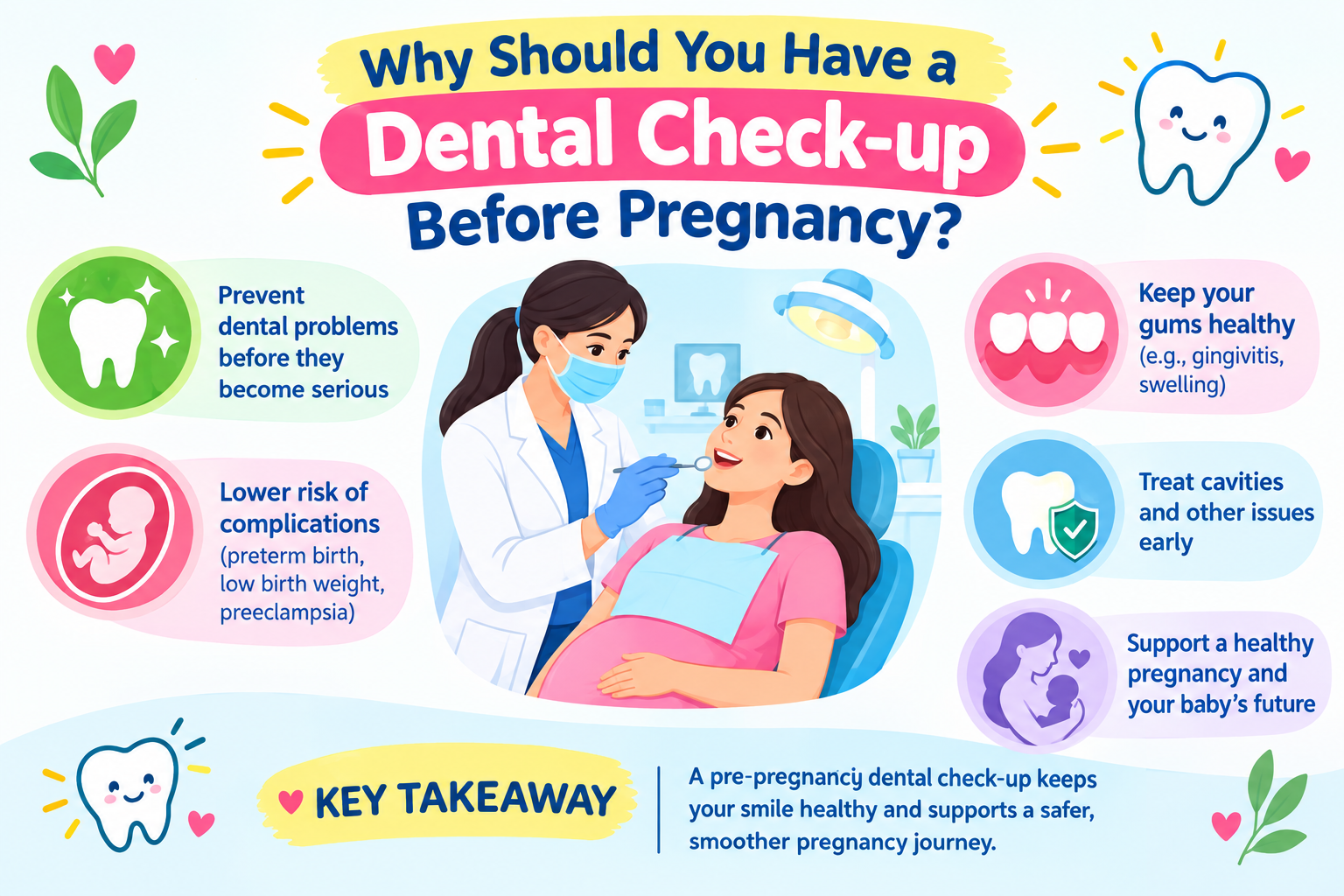
Planning a pregnancy? You may be focusing on diet, exercise, nutritional supplements, and overall well-being. But have you considered a pre-pregnancy dental check-up? Ignoring your oral health before your pregnancy may be troublesome to you during pregnancy period.
Case 1: A 28 years old woman who was 3 months pregnant came to a dental clinic with a complaint of swollen gums and bleeding while brushing.
Case 2: A female patient aged 30 years who was 5 months pregnant came to a dental clinic with cavities in her two lower teeth. She was unable to chew from the left side because of pain.
Both the patients were successfully treated by a team of specialist dentists with following all precautions regarding pregnancy. However, both these cases give some important lessons to all the women who are planning for pregnancy or in child bearing age.
Pre-pregnancy Planning
Pregnancy is a very important phase of every woman’s life. The mother's physical and mental well-being matters for both herself and her growing fetus.
Planning a pregnancy includes several steps. It may include medical check-ups, healthy diet, and starting nutritional supplements, all under the guidance of a gynecologist. It is also important to stop smoking, alcohol consumption, and recreational drug use for a healthy pregnancy.
Thus, a pre-preganancy planning aims to improve women's overall health and support a healthy pregnancy. The overall health includes oral health, too.
Changes in the Mouth During Pregnancy
During pregnancy, levels of the hormones estrogen and progesterone increase. It can affect a woman's body including her mouth.
An increase in the level of estrogen during pregnancy may cause several changes in gums. They may become swollen or bleed easily. It may cause overgrowth of gums making them puffy (Gingival hyperplasia). In some women a pyogenic granuloma known as pregnancy tumor may also develop.
Poor oral health during pregnancy can increase the risk of preterm birth, low birth weight in babies, and preeclampsia (a pregnancy complication characterised by persistent high blood pressure during pregnancy or after delivery).
Why to Consider Pre-pregnancy Dental Check-Up?
Pregnancy is a journey of 9 months. During this period many physical and emotional changes may occur in a woman's body. Any decay causing intermittent pain, cavities causing frequent food impaction, and pain on chewing should not be ignored.
A routine dental check-up before pregnancy may identify dental problems before they cause any symptoms. These may include abnormally erupting or malaligned wisdom teeth, early caries, mild gingival inflammation etc.
A pre-pregnancy dental check-up can rule out any such dental problems. Appropriate treatment can be carried out before pregnancy to avoid complex dental procedures during pregnancy.
Emergency dental procedures can be performed during pregnancy when necessary with appropriate safety precautions. However, identifying and treating the dental problems before pregnancy may help avoid complications.
Teeth Cleaning Before Pregnancy And Gum Problems During Pregnancy
Pregnancy gingivitis is more likely to occur when gum inflammation is already present. Pregnancy does not cause periodontal problems but it can worsen the existing gum problems.
Plaque and tartar can further irritate the gums and increase swelling and bleeding during pregnancy.
A 2008 literature review suggests a positive association between periodontal disease and low birth weight babies.
Considering pre-pregnancy dental check-ups may help rule out any signs and symptoms of existing gum diseases. Professional dental cleaning (scaling)- a simple dental procedure can remove plaque and tartar. This may help improve gum health during pregnancy.
The first case mentioned above, gives a lesson on importance of not ignoring pre-pregnancy dental check-up for healthy gums during pregnancy.
Pre-pregnancy Dental Check-Up And Cavities in Your Teeth
In the second case, a five-month pregnant woman was not able to chew from the left side and having painful cavities in her two lower teeth. One of her teeth was treated with root canal treatment and another needed filling. Her symptoms relieved after the treatment.
If the patient had visited a dentist before pregnancy and paid attention to pre-pregnancy dental check-up and preventive dental care, this problem could have been prevented.
Frequent vomiting during pregnancy may release stomach acid in the mouth. This may cause loss of enamel known as erosion of the tooth. Changes in salivary flow and composition during pregnancy may weaken the immune defence against bacteria causing decay.
These factors may contribute to an increase in caries incidence during pregnancy. So, preventive treatment before pregnancy for any existing asymptomatic cavities or decay is advisable. This may help prevent them from progressing during pregnancy.
Is Dental Treatment Safe During Pregnancy?
Dental procedures during pregnancy may need some additional precautions. This is because of the physical changes in the woman’s body and ongoing development of the fetus throughout the pregnancy.
Simple procedures of filling or teeth cleaning can be performed. But procedures such as tooth removal or root canal treatment may need extra care as they require dental x-rays, administration of anesthesia, and longer clinical appointments.
Managing the Dental Problems During Pregnancy
There are certain safety guidelines with respect to the stages of pregnancy and growing foetus, which are helpful for performing emergency dental treatment if required.
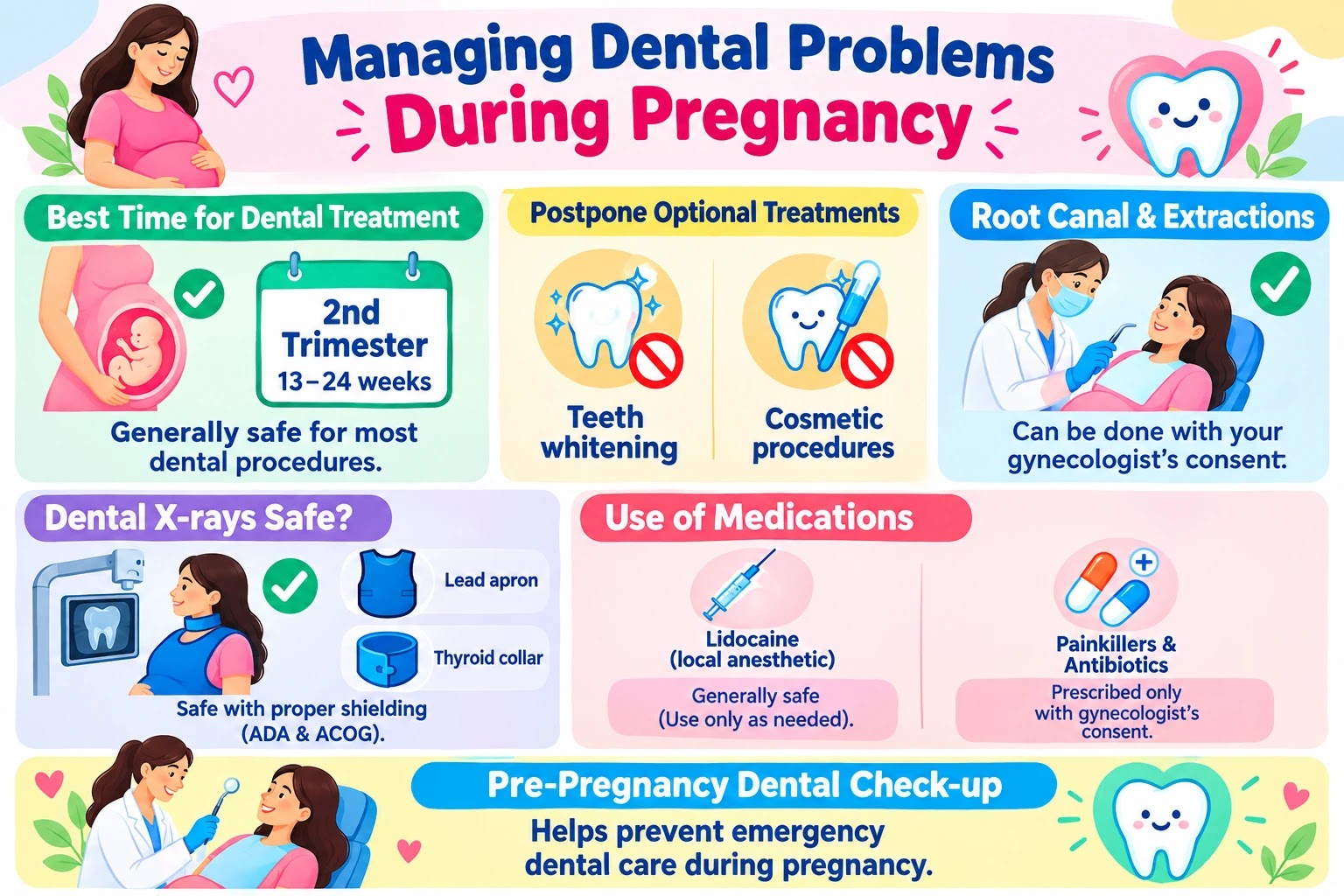
According to 2013 review on oral care, the second trimester of pregnancy (13-24 weeks) is generally considered safe for dental procedures. During this time most of the fetus organ formation has been completed. The size of the fetus is also not too much to cause problems for expecting mothers on the dental chair during appointments.
However, it is best to postpone optional dental treatments such as teeth whitening or any cosmetic dental procedures.
Root canal treatment or dental extractions (tooth removal) if required can be performed with the consent of the patient’s gynecologist.
Are Dental X-rays Safe During Pregnancy?
Radiation exposure may be harmful to the developing fetus. However, as per American dental association (ADA) and American College of Obstetricians and Gynecologists (ACOG), dental x-rays during pregnancy are safe with appropriate shielding.
According to ADA, radiation exposure from intraoral dental x-rays are not significant enough to cause any adverse effects on fetus.
Thus, dental X-rays can be taken if necessary with the use of protective equipment including lead apron and thyroid collar.
Use of Medications During Pregnancy
Most of the emergency dental procedures done during pregnancy including tooth extractions and root canal treatment may require use of local anesthesia.
The patient may also need medications including painkillers and/or antibiotics after such procedures.
It is important to provide details about your pregnancy and any other medical conditions to your dentist. Accordingly, the dentist will prescribe medication suitable to you by discussing the condition with your gynecologist.
According to a study, use of lidocaine, a local anesthetic agent, is generally considered safe for dental procedures during pregnancy. However, it should be used as little as possible to cause effective numbness.
Thus, it is possible to treat problems related to teeth and gums during pregnancy. However, considering dental check-up as a part of pre-pregnancy planning may help prevent such dental emergencies.
Oral Care Tips During Pregnancy
-
Brush two times daily with fluoride toothpaste.
-
Do flossing, tongue cleaning throughout the pregnancy.
-
Do gargles using simple water after food.
-
Some women may have frequent vomiting during pregnancy. Doing gargles after vomiting may help remove stomach acid from teeth surfaces and prevent erosion of teeth enamel.
-
Hormonal changes during pregnancy may cause gum problems.
-
Do not ignore any signs of bleeding gums, gum swelling or pain.
- Multiple factors may increase the caries risk during pregnancy. So, take extra care of your teeth.
-
Provide details about your pregnancy and any other systemic problems during a dental visit.
Key Takeaways:
Pre-pregnancy dental check-up should be considered as a part of pregnancy planning. It is the most important step that helps maintain dental health during pregnancy. Poor oral health may have a negative impact on pregnancy outcome.
A healthy diet is necessary throughout the pregnancy. The teeth serve an important function of chewing food. So, taking care of teeth and gums may ultimately be beneficial to an expecting mother and growing fetus too.
References:
-
Vt H, T M, T S, Nisha V A, A A. Dental considerations in pregnancy-a critical review on the oral care. J Clin Diagn Res. 2013;7(5):948-953. doi:10.7860/JCDR/2013/5405.2986
-
Javaid MM, Khalid SN, Khan SA, et al. Exploring the Influence of Oral Health on Pregnancy Outcomes: A Narrative Review: Oral Health and Pregnancy Outcomes. Glob Health Epidemiol Genom. 2025;2025:9304496. Published 2025 Jul 18. doi:10.1155/ghe3/9304496
-
https://americanpregnancy.org/pregnancy/dental-work-and-pregnancy/
Disclaimer:
The information shared here is for educational purpose only and cannot replace professional medical/dental advise, diagnosis, or treatment. Always consult a qualified medical and/or dental professional for any dental problems before or during pregnancy.
About the Author:
Dr. Zankhana Shah is a dentist with 10 years of experience in clinical dentistry. She has a special interest in medical content writing. She likes to create educational content on different topics including dentistry, diet, nutrition, fitness, and wellness etc.


No comments:
Post a Comment