
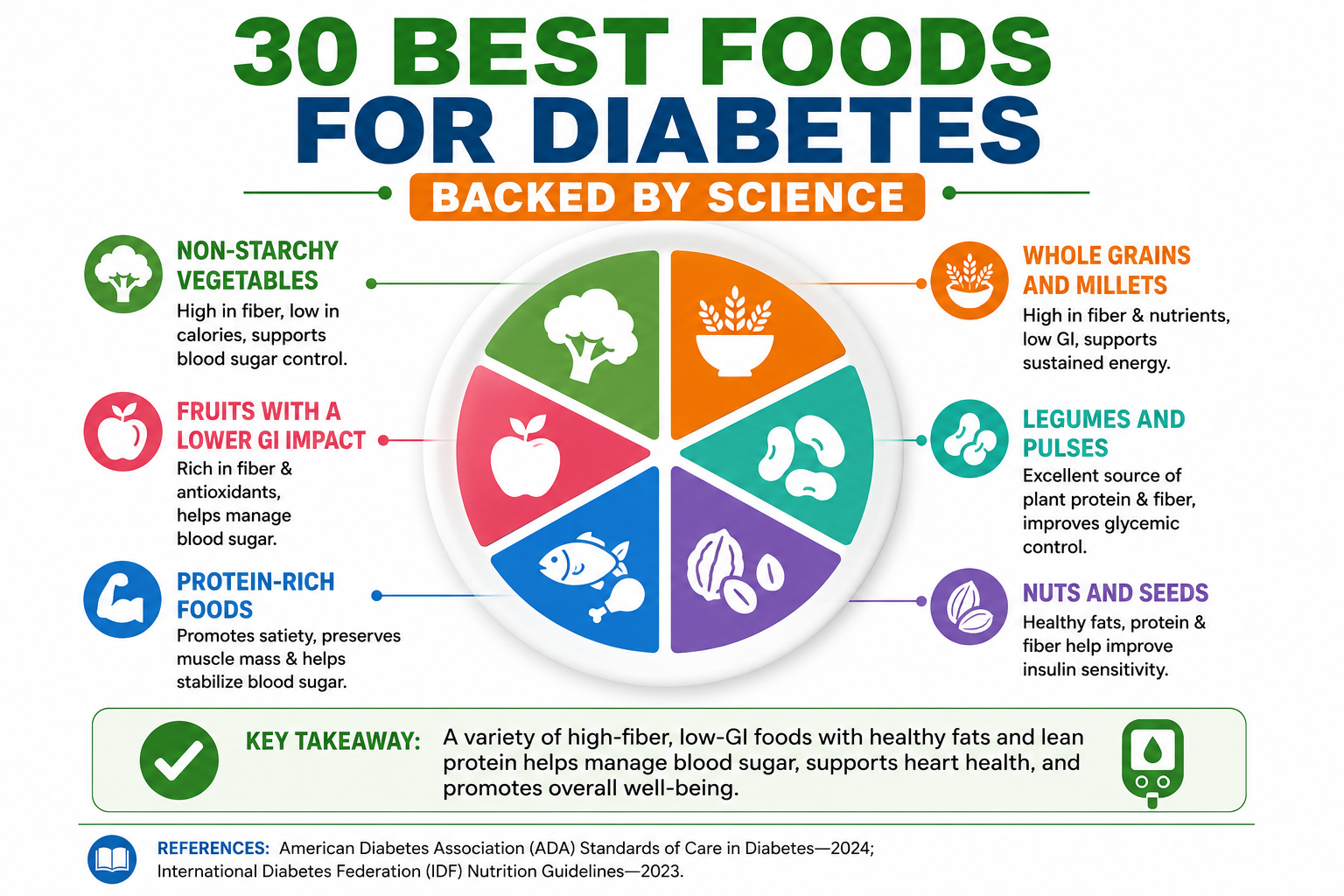
Are you worried about what to eat when you have diabetes or how to obtain essential nutrients without causing sudden rises in blood sugar? The best foods for diabetes control are generally rich in fibre, protein, healthy fats, vitamins and minerals, and when eaten in the appropriate portions, they can support blood sugar management and overall health. This guide explores 30 science-backed foods that can be easily included in Indian meals, including vegetables, whole grains and millets, pulses, lower-GI fruits, nuts, seeds and protein-rich foods.
30 Best Foods for Diabetes Control
Non-starchy vegetables.
These vegetables are low in carbohydrates, high in fiber, and don't spike your blood sugar quickly. Try filling half your plate with these instead of white rice (CDC, 2024).
-
Spinach: Rich in vitamins C and E, fiber, and magnesium, which may support better insulin action
-
Cauliflower: A low-carb substitute for rice or mashed potatoes
-
Broccoli: High in sulforaphane (antioxidant) and fiber, reducing oxidative stress
-
Fenugreek (methi): Contains soluble fiber, which aids in slow carbohydrate digestion
-
Bitter Gourd(karela): Contains insulin-like peptides, which may mimic insulin action (Viswanathan et al., 2025, RSSDI 2025)
A continuous increase in blood sugar levels increases the production of free radicals, which can worsen insulin resistance. Non-starchy vegetables are rich in antioxidants that help neutralize these free radicals and protect your body’s cells.
Whole grains and Millets
These are rich in fiber and help you feel full and energetic for longer.
-
Oats: contain soluble fiber, beta-glucan fiber, which slows glucose absorption.
-
Brown rice: Retains its bran and germ layer; a low-GI substitute for white rice, it keeps you full longer.
-
Barley: High in fiber, especially beta-glucan, and a low-GI food.
-
Quinoa: A good source of protein with low GI.
-
Finger millet (ragi): Rich in calcium and fiber, promotes stable blood sugar levels. (Viswanathan et al., 2025, RSSDI 2025)
Legumes and Pulses
These are an excellent source of plant-based protein and fiber. As a result, they help slow the rise in blood sugar after a meal.
-
Lentils: High in soluble fiber and protein, with a low GI.
-
Chickpeas: Low GI food, rich in fiber and a good source of protein.
-
Kidney beans (rajma): High in resistant starch and fiber, which helps in the slow digestion of carbohydrates.
-
Green gram (moong): Rich protein source, light, and easy to digest.
-
Black gram (urad): A source of plant-based omega-3 acids (Viswanathan et al., 2025, RSSDI 2025).
Fruits with a lower GI impact
People with diabetes can eat fruits; however, choosing lower-glycemic-index fruits and consuming them in appropriate portions may help support better blood sugar control.
-
Guava: Rich in vitamin C and fiber.
-
Apple: Contains soluble fiber (pectin), which slows sugar absorption.
-
Pear: A low-GI fruit and a source of fiber.
-
Orange: Provides vitamin C, antioxidants, and a relatively low GI source.
-
Berries: Blueberries, strawberries, and raspberries are rich in antioxidants and fiber (Viswanathan et al., 2025, RSSDI 2025).
Nuts and Seeds
Nuts and seeds provide healthy fats, protein, and fibre. Consequently, they may help maintain steadier blood sugar levels and promote fullness.
-
Almonds: Rich in healthy fats, fibre, and magnesium.
-
Walnuts: Rich in omega-3 fatty acids.
-
Chia seeds: Rich in soluble fibre, they form a gel-like texture that slows digestion.
-
Flaxseeds: Rich in fiber and omega-3 fatty acids.
-
Pumpkin seeds: Provide protein, healthy fats, magnesium, and antioxidants.
Research shows:
-
For example, adding 43 g of almonds to your daily diet for 12 weeks may reduce HbA1c levels and help reverse prediabetes.
-
Try including 20g of almonds before a major meal, as this may support healthy weight management and help reverse prediabetes within 3 months (Viswanathan et al., 2025, RSSDI 2025).
Protein-rich best foods for diabetes control
Additionally, protein can help you feel full, support muscle mass, and cause a smaller rise in blood sugar than many carbohydrate-rich foods.
-
Salmon: Rich in omega-3 fatty acids and high-quality protein.
-
Skinless chicken: A lean protein source with less saturated fat.
-
Eggs: Rich in protein; can be a part of a balanced meal.
-
Tofu: A plant-based protein suitable for vegetarians and vegans.
-
Plain Greek yogurt or unsweetened: Rich in protein and probiotics, with little or no added sugars (Viswanathan et al., 2025, RSSDI 2025).
More Ways to Enjoy the Best Foods for Diabetes Control in Diverse Indian Meals
Explore healthier versions of traditional dishes
-
Use low-GI whole-grain rice instead of high-GI white rice in biryani.
-
Choose unpolished instead of polished grains.
Rediscover the nutritional value of millets.
-
For adults, millets should make up no more than 20%–30% of total cereal intake.
-
Similarly, for children up to 10 years of age, millets should account for no more than 20% of total cereal intake (ICMR–NIN, 2024).
Most importantly, other healthy swaps
-
Choose brown rice instead of white rice.
-
Similarly, choose whole-wheat rotis instead of refined grains (ICMR–NIN, 2024).
Add flavour and support better health with spices
-
Add spices like turmeric, fenugreek(methi), and cinnamon regularly to your meals.
-
In addition, use a variety of cooking oils—such as groundnut, rice bran, mustard and sesame oil—in moderation rather than relying on one type.
-
Similarly, including nuts and seeds in your daily diet is strongly recommended.
Smart snacking
-
Plan your snacks so that you are less likely to reach for fried or very sugary foods.
-
Choose nutritional snacks such as roasted chana sprinkled with spices.
-
Instead of fried snacks, choose healthier options such as nuts, fresh vegetable slices with a yoghurt-based dip, or a small portion of sprouted legumes. (Viswanathan et al., 2025, RSSDI 2025).
Practice mindful eating
-
To begin with, remember that how you eat is as important as what you eat.
-
Moreover, follow a regular meal schedule with appropriate portions.
-
At the same time, eat slowly and chew well, and try to savour each bite.
-
Whenever possible, avoid distractions such as watching TV or using your phone while eating.
-
Most importantly, stop eating when you feel comfortably full to avoid overconsumption (Viswanathan et al., 2025, RSSDI 2025).
Limit sweetened drinks
Instead, choose plain water or unsweetened beverages, such as buttermilk and lemon water without added sugar or salt (Viswanathan et al., 2025, RSSDI 2025).
Key takeaways
-
First, avoid sugar-sweetened beverages, as they add extra calories and may worsen blood sugar control.
-
Next, fill half your plate with non-starchy vegetables, one-quarter with whole grains or millets, and one-quarter with protein-rich foods.
-
In addition, eat vegetables before carbohydrates, such as rice or roti, to help slow the rise in blood sugar.
-
Whenever possible, choose whole, minimally processed foods over packaged and highly processed foods.
-
Finally, combine the best foods for diabetes control with regular physical activity for better overall diabetes management.
Conclusion
To sum up, choosing the best foods for diabetes control can promote steadier blood sugar levels and improve overall nutrition. Therefore, focus on fibre-rich vegetables, whole grains, pulses, lower-GI fruits, nuts, seeds and protein-rich foods while keeping portion sizes in mind. However, no single food can manage diabetes on its own. Instead, combining a balanced diet with regular physical activity, prescribed medicines and routine blood sugar monitoring can make diabetes management more effective. Overall, a varied diet is more beneficial than relying on any single food.
References
-
ICMR–National Institute of Nutrition. (2024). Dietary guidelines for Indians. Indian Council of Medical Research. https://www.nin.res.in/
-
Centers for Disease Control and Prevention. (2024, May 15). Diabetes meal planning. https://www.cdc.gov/diabetes/healthy-eating/diabetes-meal-planning.html
-
Mohan, V. (2025). RSSDI 2025 nutrition guidelines for type 2 diabetes—A tribute. International Journal of Diabetes in Developing Countries, 45, 1325–1326. https://doi.org/10.1007/s13410-025-01505-x
-
Centers for Disease Control and Prevention. (2018). Tasty recipes for people with diabetes and their families. https://doi.org/10.15620/cdc/251976
About the Author
Dr. Veena N J is a healthcare professional, medical writer, and health communications specialist with multidisciplinary experience in clinical care, telemedicine, health insurance, and medical content development. She combines clinical expertise, scientific research, and strategic communication to create evidence-based content that is accurate, accessible, and impactful. Her areas of interest include patient education, preventive healthcare, medical affairs content, healthcare journalism, and digital health communication.
Click on this link to connect with the authorDisclaimer:
The information provided in this article is for educational purposes only and is not intended to replace professional medical advice, diagnosis, or treatment. Always consult a qualified healthcare professional regarding any medical concerns or before making changes to your diet, lifestyle, or medications.


No comments:
Post a Comment