
Sudden Hair Shedding in Females:
Causes, Treatment & How to Stop It
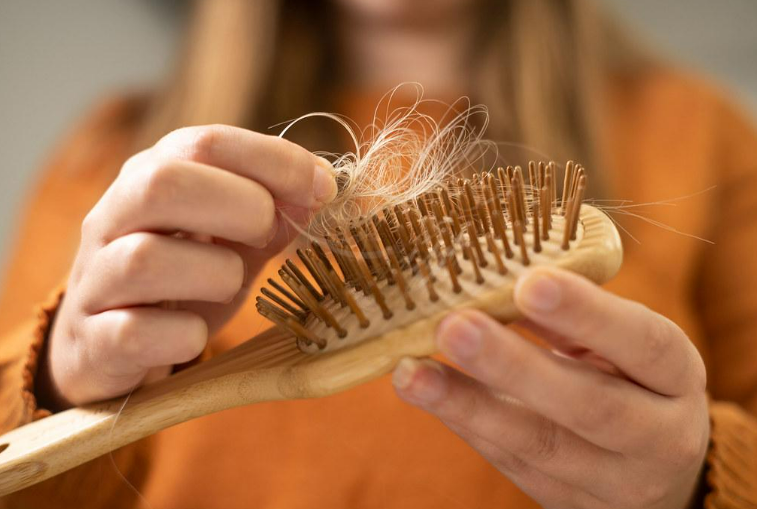
Sudden hair shedding in females can feel alarming, especially when it happens all at once. If you’re noticing excessive hair fall while washing or brushing, it may be linked to a condition known as telogen effluvium. You’re just minding your business, washing your hair, and suddenly it looks like you’re shedding enough to knit a wig.
Take it easy. This doesn't usually mean that your hair will fall out forever. Telogen effluvium is characterized by a shift of a large number of hair follicles from the anagen (growth) phase to the telogen (resting) phase. Harrison and Sinclair (2002) describe this condition as a reactive process triggered by physiological or emotional stress. The delay of 2–3 months between the triggering event and visible shedding is a well-documented feature of this condition, making it appear sudden despite having an earlier onset.
What’s Actually Happening (a.k.a. why your hair is betraying you)
Hair growth occurs in three main phases:
anagen (growth), catagen (transition), and telogen (rest). Most hair stays in the anagen phase when things are normal. But during telogen effluvium a lot of hair follicles move into the telogen phase too soon.
This shift is usually triggered by physiological or emotional stress. Research suggests that factors such as nutritional deficiencies, hormonal fluctuations, illness, or sudden weight loss can disrupt the normal hair cycle. Importantly, the shedding does not occur immediately after the trigger but typically appears 2–3 months later, making it seem sudden.
Hair Shedding vs Hair Fall (yes, there’s a difference)
It is important to differentiate between normal hair fall and excessive shedding.
-
Hair fall refers to the natural loss of 50–100 strands per day as part of the normal cycle.
-
Hair shedding involves a noticeable increase in hair loss, often in clumps, and is usually temporary.
Knowing the difference helps you figure out if the problem is physiological or needs treatment.
Why does sudden hair shedding in females happen? (Top Triggers)
Several underlying factors contribute to sudden hair shedding in females:
-
Nutritional deficiencies, especially protein, iron, and essential vitamins, which are critical for hair follicle function
-
Hormonal imbalances, particularly changes in estrogen and progesterone levels
-
Physical or emotional stress, which elevates cortisol and disrupts the hair cycle
-
Post-illness recovery, where the body prioritizes essential functions over hair growth
Clinical studies indicate that deficiencies in iron (low ferritin levels), vitamin D, and B12 are strongly associated with diffuse hair shedding.
First 10 Days: Stop the Panic Spiral
Although it is not possible to stop shedding instantly, early intervention can help stabilize the condition and prevent further progression.
Key focus areas include:
-
Reducing scalp inflammation
This inflammation may result from factors such as microbial imbalance, excess sebum oxidation, or irritation from harsh hair products. Using gentle, non-irritating shampoos and, when needed, medicated options like ketoconazole can help reduce this inflammatory response and support a healthier scalp environment.
-
Improving blood circulation to hair follicles
For hair follicles to stay in the growth phase, they need enough blood flow to get oxygen and nutrients. Less blood flow to the follicles can make them stay dormant. Minoxidil and other topical treatments are known to improve blood flow to the scalp by opening up blood vessels. A light scalp massage may also help circulation for a short time. But too much or too strong stimulation should be avoided because it could make shedding worse.
-
Avoiding excessive mechanical or chemical stress on the hair
During this time, hair loss can happen more quickly if you put too much stress on your hair, like by wearing tight hairstyles, brushing too much, or using heat styling tools. Chemical treatments like coloring, straightening, or using harsh products can also hurt the hair shaft and scalp barrier. Minimizing these stressors helps stop more hair loss that doesn't have to happen during the stabilization phase.
What Actually Helps (Evidence-Based approach)
1. Minoxidil (2% or 5%)
Minoxidil (2% and 5%) is a topical vasodilator widely used in the treatment of hair loss conditions. It enhances scalp blood circulation and promotes follicular activity by opening potassium channels.
According to Headington (1993), telogen effluvium involves a disruption in the hair cycle, and treatments that prolong the anagen phase can support recovery. Minoxidil has been shown to extend the anagen phase and stimulate vascular endothelial growth factor (VEGF), which improves follicle nourishment. An initial increase in shedding may occur due to synchronization of hair follicles, which is a temporary phase during the transition to new growth.
2. Ketoconazole Shampoo
Ketoconazole is a broad-spectrum antifungal agent that is often used to treat scalp problems like dandruff. It helps keep the scalp healthy by lowering inflammation caused by Malassezia. Ketoconazole also has mild anti-androgenic effects, which may help lessen the effects of DHT on hair follicles in the area. This makes it useful for conditions that are affected by hormones.
3. Caffeine-based serums
Caffeine-based products are thought to stimulate hair follicles by fighting the effects of DHT that make them less active. Even though they don't penetrate the scalp very well, they may help a little bit when used regularly.
4. Clean Scalp = Happy Follicles
-
Use gentle cleansing methods instead of harsh scrubbing
-
Incorporate mild exfoliating agents like salicylic acid occasionally
-
Avoid overuse of heavy oils that may clog follicles
Maintaining a clean and balanced scalp environment is essential for follicle health. Excess sebum, product buildup, and microbial activity can contribute to inflammation.
Fix It From Inside (the part people ignore)
You can oil your hair all day, but if your body is running on empty, good luck.
Key nutrients for the best vitamins for female hair fall:
-
Iron (keep ferritin above ~40–70)
-
Vitamin D3
-
B12
-
Protein & amino acids
Nutritional deficiencies are a major contributing factor to diffuse hair shedding. Almohanna et al. (2019) highlight that deficiencies in iron, vitamin D, and B-complex vitamins directly affect hair follicle cycling and growth. Similarly, Guo and Katta (2017) emphasize that inadequate protein intake can impair keratin production, leading to increased hair fragility and shedding. To get hair growth back to normal, you need to keep these nutrients at the right levels.
Hormones: The Silent Villain
-
Low estrogen → shorter hair growth phase
-
Progesterone imbalance → more hair fall
-
In females, hair thinning at the crown can overlap.
Hormonal balance plays a crucial role in maintaining healthy hair growth. A decline in estrogen levels can shorten the anagen phase, while progesterone imbalance may indirectly increase androgen activity. Telogen effluvium can sometimes happen at the same time as androgenetic alopecia, especially when the hair is thinning at the crown or along the hairline.
Hair Growth Timeline for Sudden Hair Shedding in Females (not fake “3-day miracle” nonsense)
-
Shedding slows: 2–6 weeks
-
Regrowth starts: 8–12 weeks
So if you’re searching for the fastest way to regrow hair after hair loss, please lower your expectations slightly.
When You Should Stop DIY-ing Everything If
If:
-
Hair fall lasts more than 3 months
-
You see widening part or crown thinning
-
Nothing improves
Then it’s time for tests:
-
Iron
-
Vitamin D
-
Thyroid
-
Hormones
The Bottom Line—
Many people search for how to stop sudden hair shedding or the fastest way to regrow hair after hair loss, but clinically, recovery depends on correcting the underlying cause rather than quick fixes. Most cases of sudden hair shedding are temporary and reversible. The real solution isn’t one magic oil or supplement. It's
-
Fixing internal deficiencies
-
Supporting the scalp properly
-
Staying consistent (the hardest part apparently)
And please stop expecting to stop hair fall immediately at home to have a magical answer. If that existed, half the internet wouldn’t be crying in their bathroom.
The information presented in this article is supported by existing dermatological and clinical research
Headington, J. T. (1993). Telogen effluvium: New concepts and review. Archives of Dermatology, 129(3), 356–363.
Malkud, S. (2015). Telogen effluvium: A review. Journal of Clinical and Diagnostic Research, 9(9), WE01–WE03. https://doi.org/10.7860/JCDR/2015/15219.6492
Harrison, S., & Sinclair, R. (2002). Telogen effluvium. Clinical and Experimental Dermatology, 27(5), 389–395. https://doi.org/10.1046/j.1365-2230.2002.01080.x
Almohanna, H. M., Ahmed, A. A., Tsatalis, J. P., & Tosti, A. (2019). The role of vitamins and minerals in hair loss: A review. Dermatology and Therapy, 9(1), 51–70. https://doi.org/10.1007/s13555-018-0278-6
Guo, E. L., & Katta, R. (2017). Diet and hair loss: Effects of nutrient deficiency and supplement use. Dermatology Practical & Conceptual, 7(1), 1–10. https://doi.org/10.5826/dpc.0701a01


No comments:
Post a Comment