
Imagine you are busy with your work. You suddenly feel like eating something, and slowly you picture it, then have a strong urge to leave all your work and eat it. That sudden rush is a food craving.
A food craving is a strong desire to eat a specific food that is different from normal hunger. Cravings are common, and some may even involve non-food items such as ice or dirt. They can happen for many reasons, and there is no single cause behind them. Although some cravings may be linked to deficiencies, many are not. In most cases, they reflect a temporary desire for comfort or pleasure rather than a true physical need.
Food Craving vs Hunger
Our body needs energy to carry out all its functions. When energy levels drop, the body signals the need for refuelling through hunger. Hunger is the body’s way of telling us that it needs nourishment, and it can usually be satisfied by almost any nutritious food.
Food cravings, on the other hand, are strong desires for a particular food. They can occur at any time and are often triggered by the brain’s reward system. Unlike hunger, cravings usually provide only a short-lived sense of satisfaction.
Why do Food Cravings Happen?
-
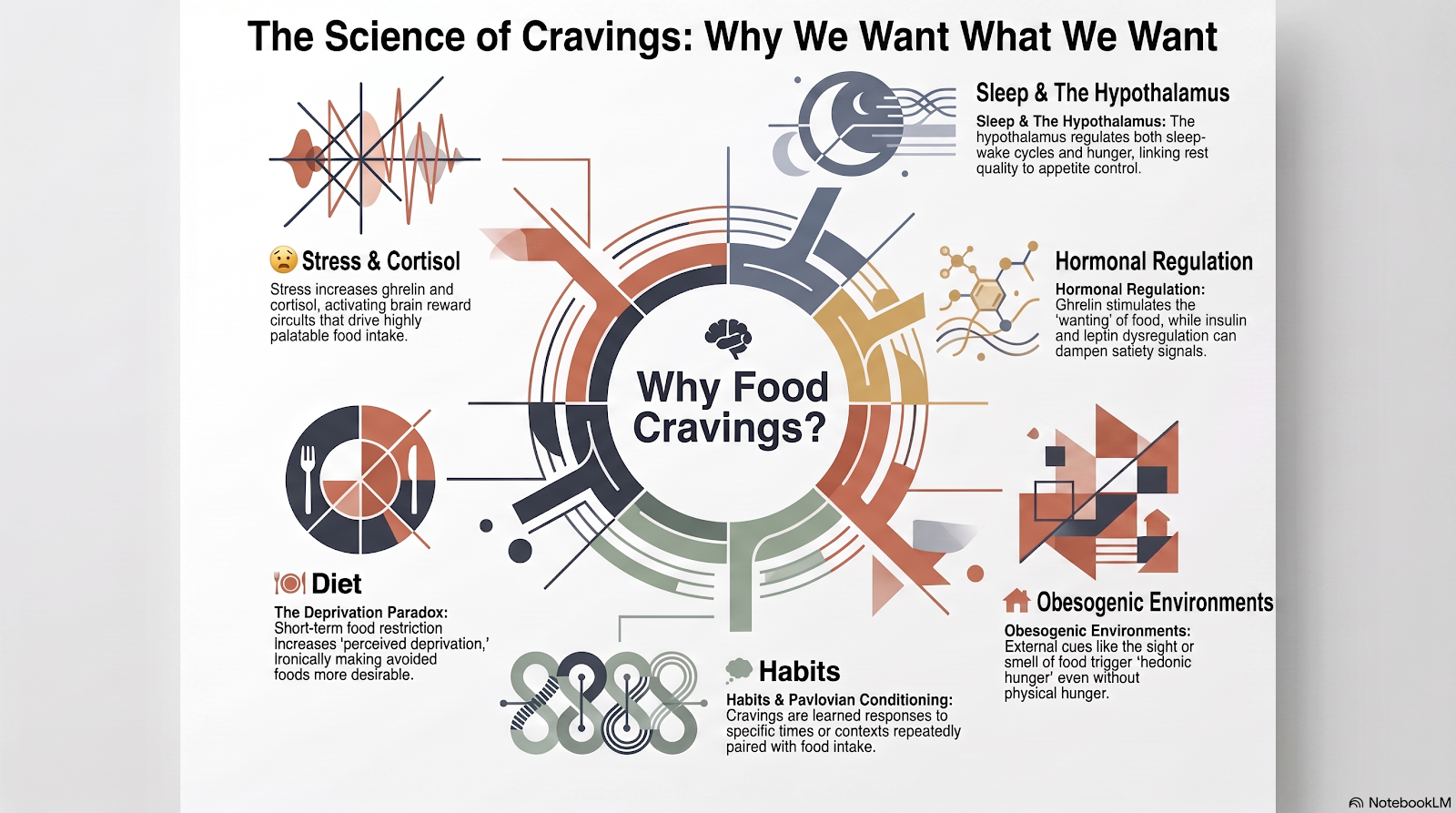
Brain reward system: The brain may associate certain foods with pleasure and happiness, which can lead to dopamine release and stronger cravings.
-
Hormonal changes: Hormones like ghrelin (hunger) and leptin (fullness) are associated with changes during PMS or pregnancy.
-
Stress and emotions: Stress, anxiety, depression, boredom, or loneliness can trigger emotional eating.
-
Sleep deprivation: Lack of sleep can disrupt hunger-related hormones and increase cravings.
-
Dietary restriction: Strict dieting or avoiding certain foods can sometimes make cravings stronger.
-
Environment and surroundings: Seeing, smelling, or even thinking about food can trigger cravings.
-
Nutrient Deficiencies (Possible but Not Always): Some cravings may be associated with nutrient deficiencies, but this is not true for most food cravings.
When Should You Pay Attention to Food Cravings?
-
Pica: Persistent cravings for non-food items like ice, dirt, or clay, as they may be associated with anemia
-
Sudden change in cravings: An increase in cravings without any changes in lifestyle. This can be linked to hormonal or metabolic changes
-
Pregnancy: Pregnancy alters the taste preference due to hormonal changes
-
Certain medications: Some medications may alter or increase food preferences
-
Unusual cravings: when cravings become excessive and interfere with daily life
-
Eating disorder: Food cravings that are difficult to control, sometimes linked with binge-eating disorder.
All these conditions require proper medical advice
Myths vs Facts
-
Myth: Food cravings means your body lacks nutrients
Facts: Most food cravings are influenced by the environmental and brian rewarding mechanisms rather than nutrient deficiency
-
Myth: Cravings and hunger are the same
Facts: Hunger reflects the body’s need for energy and can be satisfied by any nutritious food, and cravings are a strong desire for a specific food
-
Myth: Everyone experiences food cravings for the same reason
Facts: The reason for cravings can differ from person to person and may be influenced by genetics, hormones, emotions, or environments
-
Myth: People with food cravings have poor self-control
Fact: Food cravings are influenced by many factors, not simply willpower -
Myth: Every food craving means addiction to food
Facts: Food cravings for a short time are normal, but food addiction is a seperate and still debated concept that cannot be diagnosed based on cravings alone
How to Manage Food Cravings
-
Prioritise sleep and manage stress: practise stress-management techniques, such as deep meditation or breathing exercises. This habits reduces emotional eating and promotes well-being
-
Eat balanced meals: Choose meals rich in protein, fibre and healthy fats promote fullness and help cut unnecessary food cravings
-
Stay hydrated: Drink enough water throughout day to support normal body function and helps to distinguish thirst from hunger
-
Practise mindful eating: Eat slowly and pay attention to your food and the level of hunger. This helps you recognize whether your eating is because of physical or emotional hunger
-
Stay physically active: Physical activities can improve mood and reduce stress. This helps manage stress-related food cravings.
-
Seek medical advice at the right time: The right advice during persistent or unusual cravings can help identify any medical or nutritional condition.
Conclusion
Food cravings are normal and are influenced by the brain, hormones, emotions, and surroundings. Understanding the cause of cravings and making small changes in habits like sleep, nutrition, managing stress, and mindful eating can make a huge difference in response to food cravings
Reference
Brain Activity Associated With Regulating Food Cravings: Giuliani NR, Cosme D, Merchant JS, Dirks B and Berkman ET (2020) Brain Activity Associated With Regulating Food Cravings Predicts Changes in Self-Reported Food Craving and Consumption Over Time. Front. Hum. Neurosci. 14:577669. doi: https://doi.org/10.3389/fnhum.2020.577669
Meule, A. The Psychology of Food Cravings: the Role of Food Deprivation. Curr Nutr Rep 9, 251–257 (2020). https://doi.org/10.1007/s13668-020-00326-0
Food Myths or Food Facts?: Florença, S.G.; Ferreira, M.; Lacerda, I.; Maia, A. Food Myths or Food Facts? Study About Perceptions and Knowledge in a Portuguese Sample. Foods 2021, 10, 2746. https://doi.org/10.3390/foods10112746
Disclaimer:
This content is for awareness and educational purposes only. For medical concerns, consult a qualified healthcare professional.
About the Author
Priya Varshini S is a biotechnology graduate with a passion for research, lifelong learning, and content writing. They enjoy exploring diverse topics, continuously learning, and transforming ideas into clear, engaging, and reader-friendly content.
Thank you!
Every craving has a cause, and every cause has a solution


No comments:
Post a Comment